How Craig Ferguson Qualified for Gran Fondo Worlds With a Full-Time Job and a Family
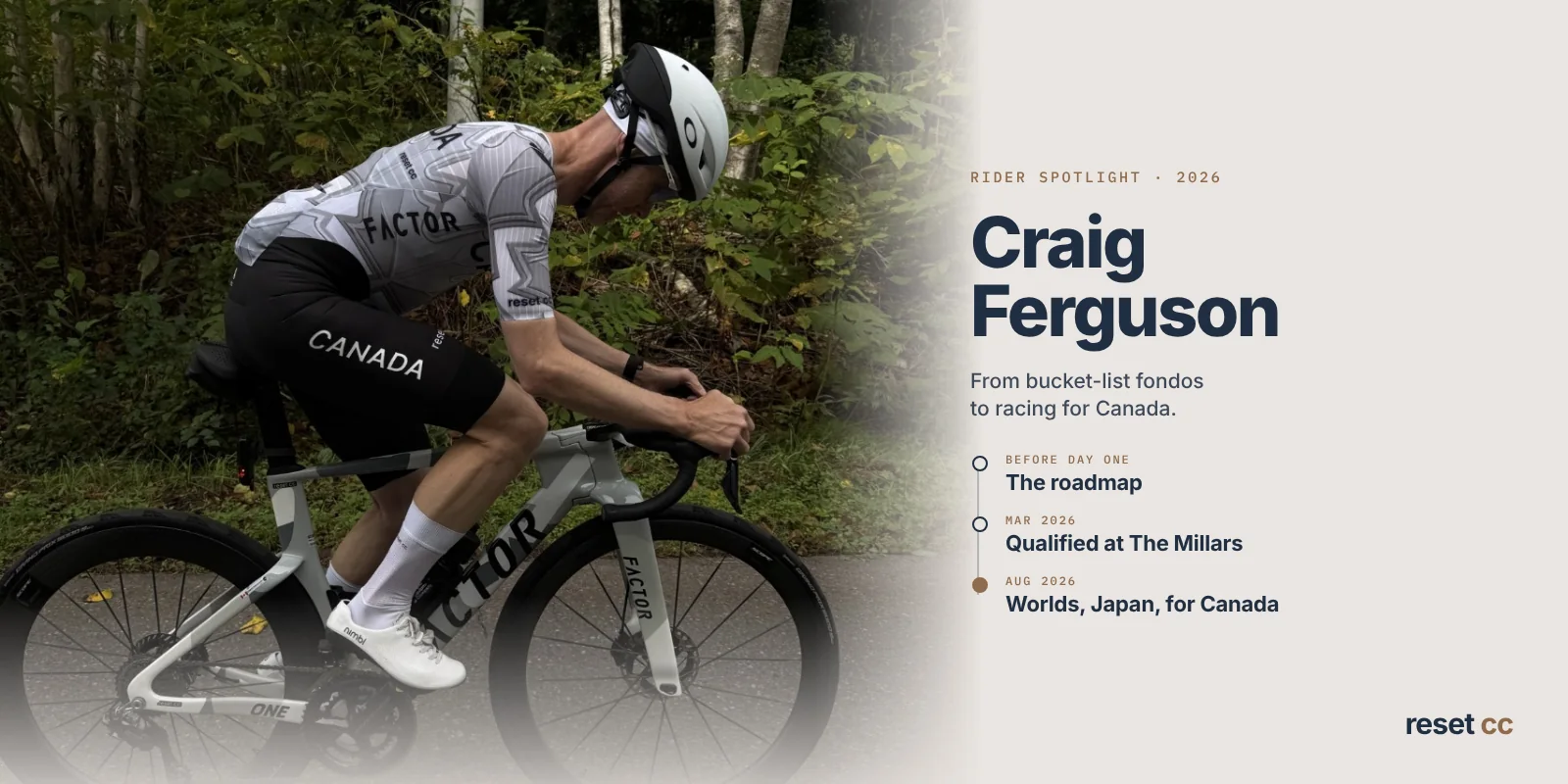
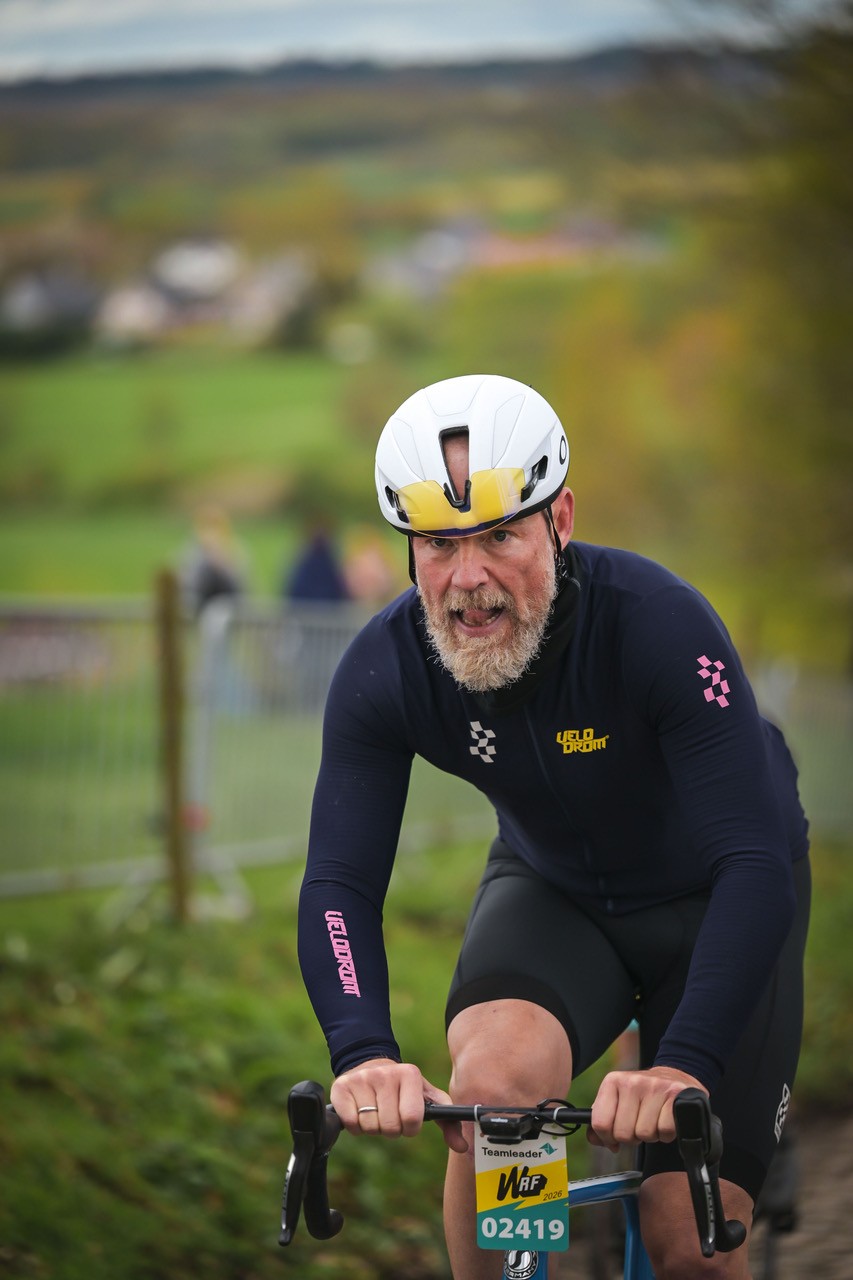
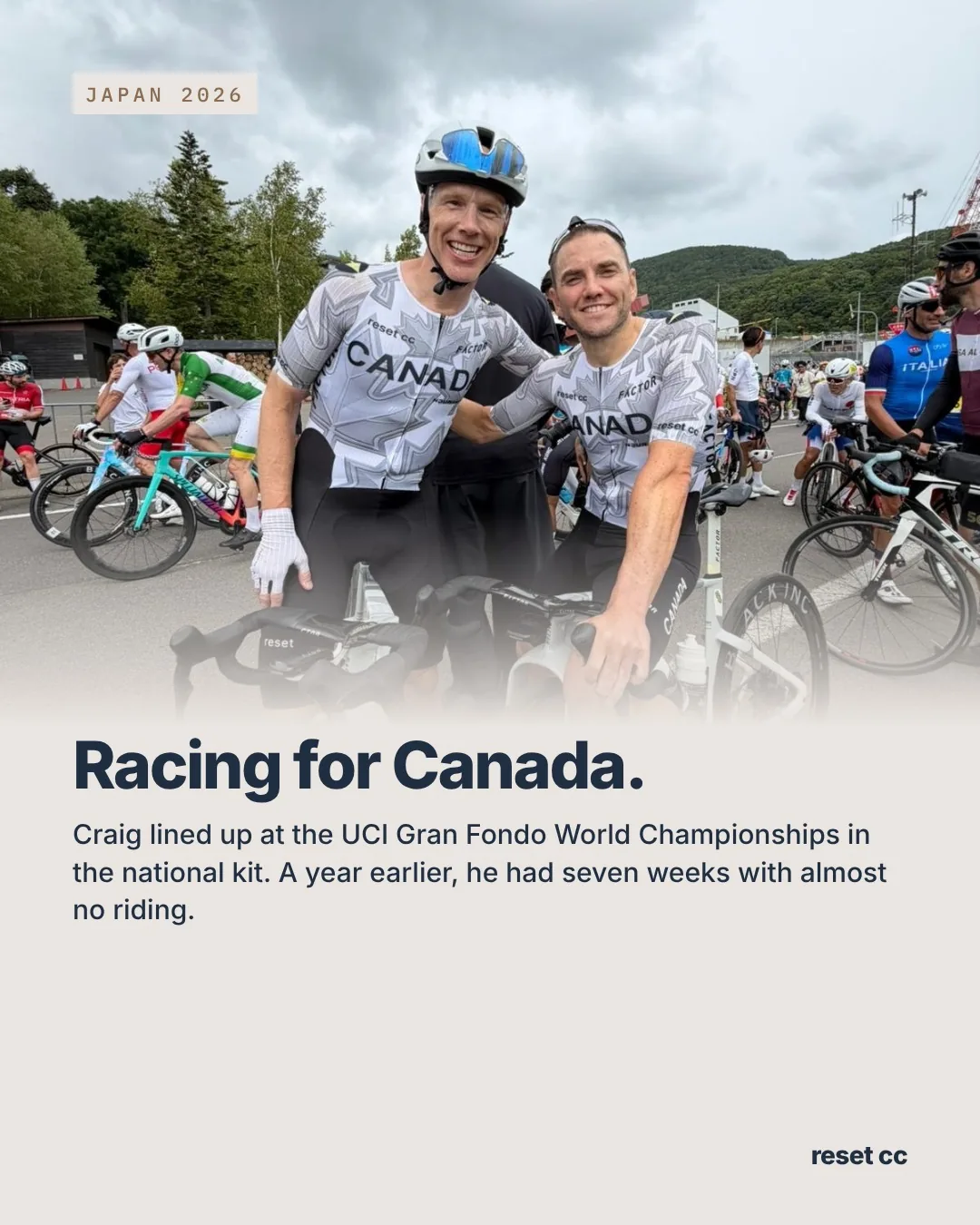
In August, Craig Ferguson lined up at the UCI Gran Fondo World Championships in Japan wearing the Canadian kit. He has a demanding job, he rides his bike to the office, and he is a husband and a father. He got to that start line on the hours he already had. What changed was that every one of those hours was pointed at the same goal.
Craig’s season at a glance
Joined reset cc: November 2025, with a full-time job and a family
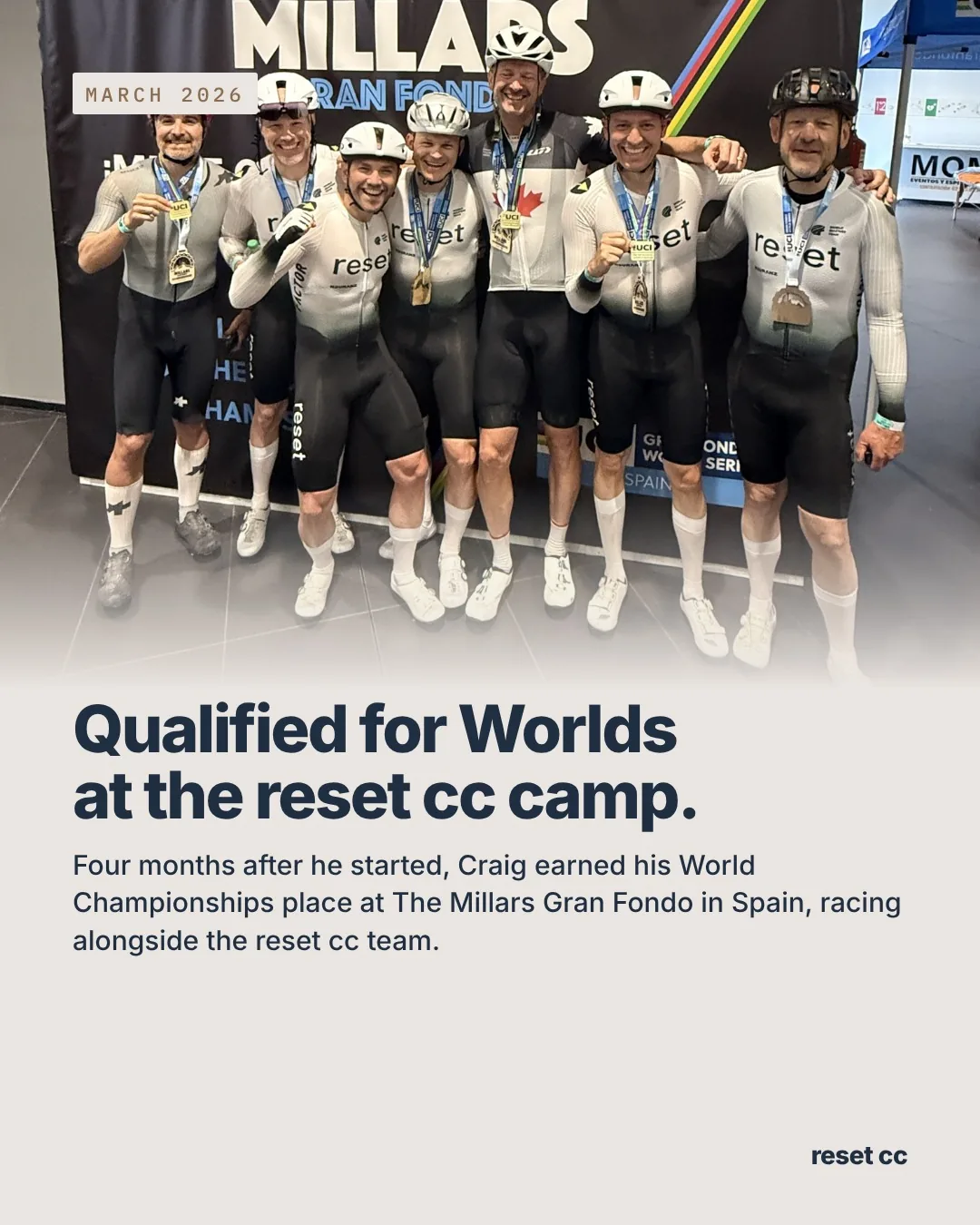
Qualified for Worlds: March 2026, at The Millars Gran Fondo in Spain
Raced Worlds: August 2026, UCI Gran Fondo World Championships in Japan, for Canada
Training: about 11 hours a week, with about a third of it from his commute
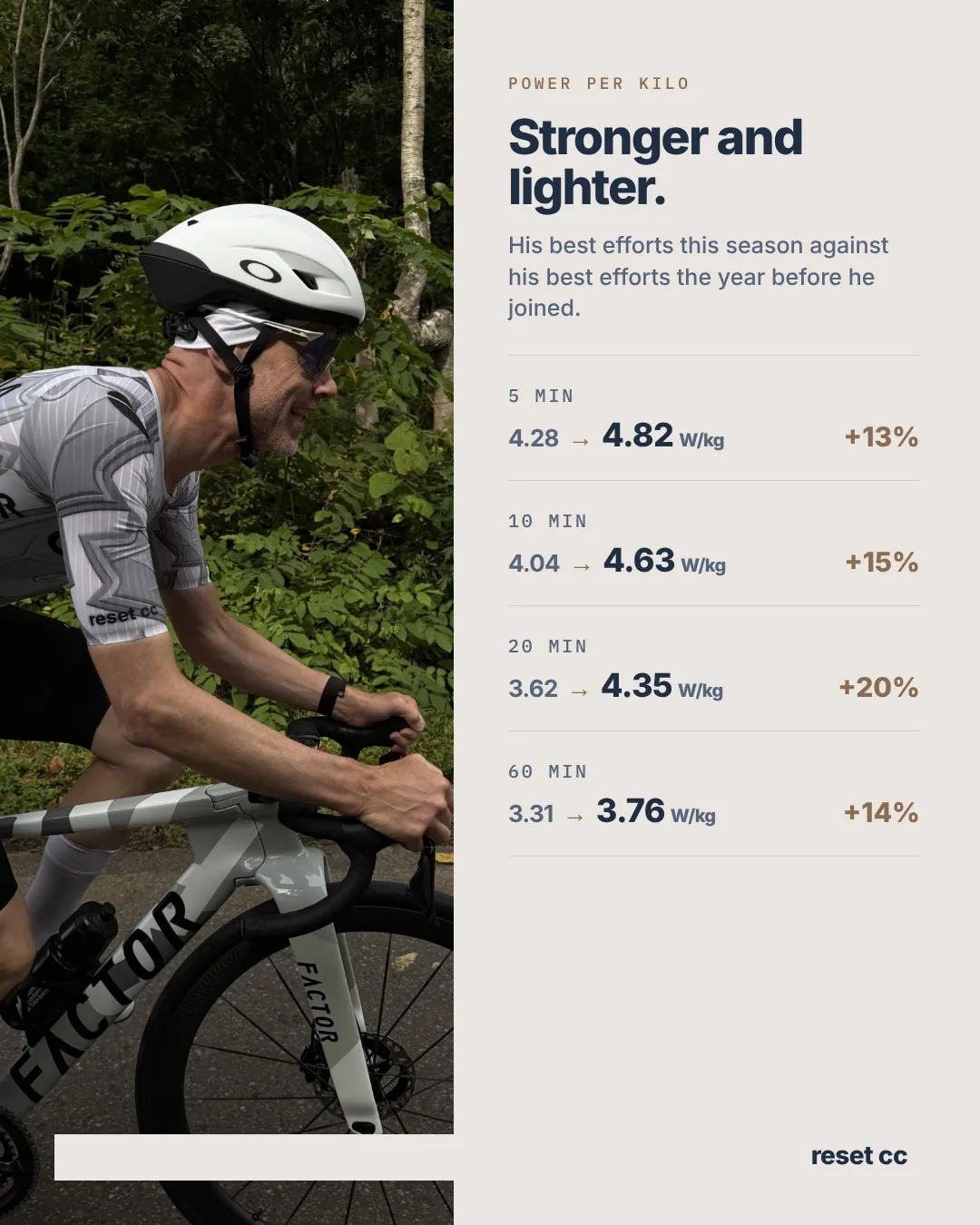
Result: 20 minute power up 20%, from 3.62 to 4.35 W/kg, and 4 kg lighter
Before reset cc: a calendar full of great days
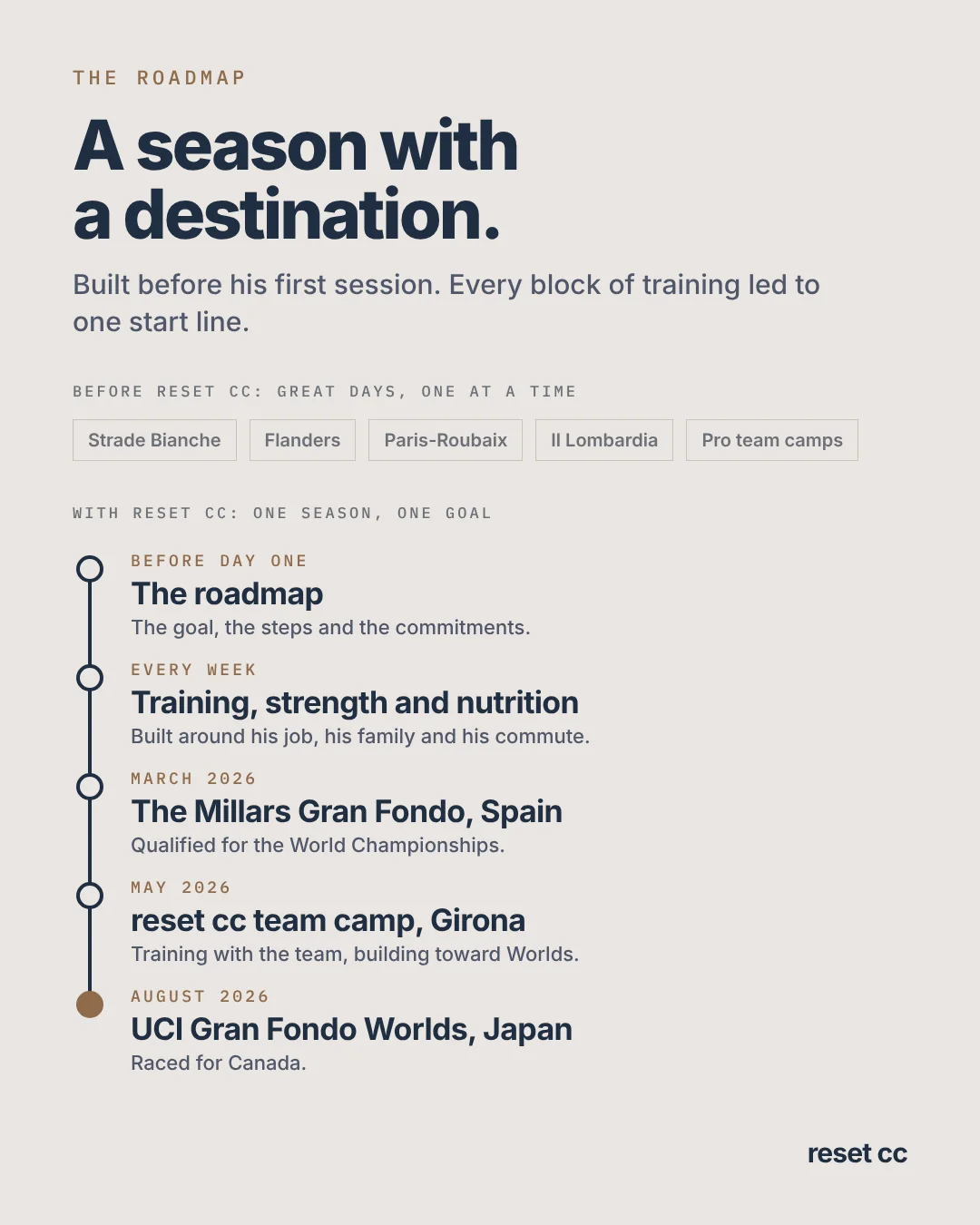
Craig was already a committed rider before he joined reset cc. He had ridden the gran fondo editions of Strade Bianche, the Tour of Flanders, Paris-Roubaix and Il Lombardia, and he had been to pro team training camps. These are some of the best days you can have on a bike.
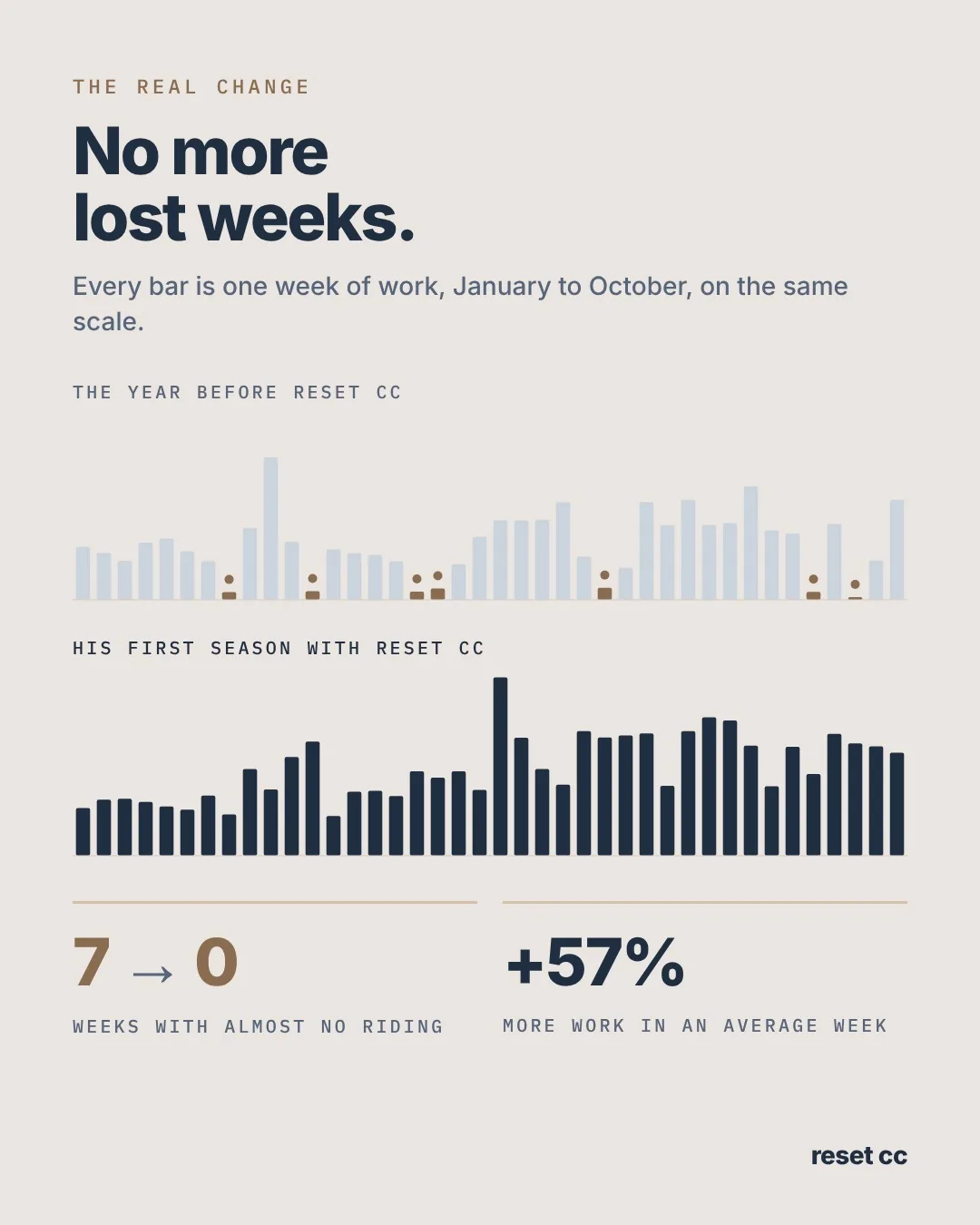
Each of them was its own target, though. His training built up before an event and drifted after it. In the first nine months of 2025 he rode 322 hours, but seven of those weeks came in under 1,000 kJ, which for a rider at his level is a week that mostly didn’t happen. A work trip, a busy week at home, a deadline. Without a bigger goal to protect, those weeks were easy to lose.
The roadmap: a season built around the UCI Gran Fondo World Series
Before Craig started with us, we built his season. The goal was the UCI Gran Fondo World Series: qualify for the World Championships, then represent Canada in Japan in August. For a masters rider that is a once in a lifetime opportunity, and it was one Craig could realistically reach.
The roadmap laid out the steps: where he would qualify, the camps where he would train with the team, how his training would build through the year around his job and his family, and the commitments each step would need from him. Every session on his calendar connected back to it. Craig read it, believed it was possible, and committed to it.
How Craig trained around a full-time job and a family
Once the season had a destination, the discipline got easier. A week that would have been written off now had a reason to happen.
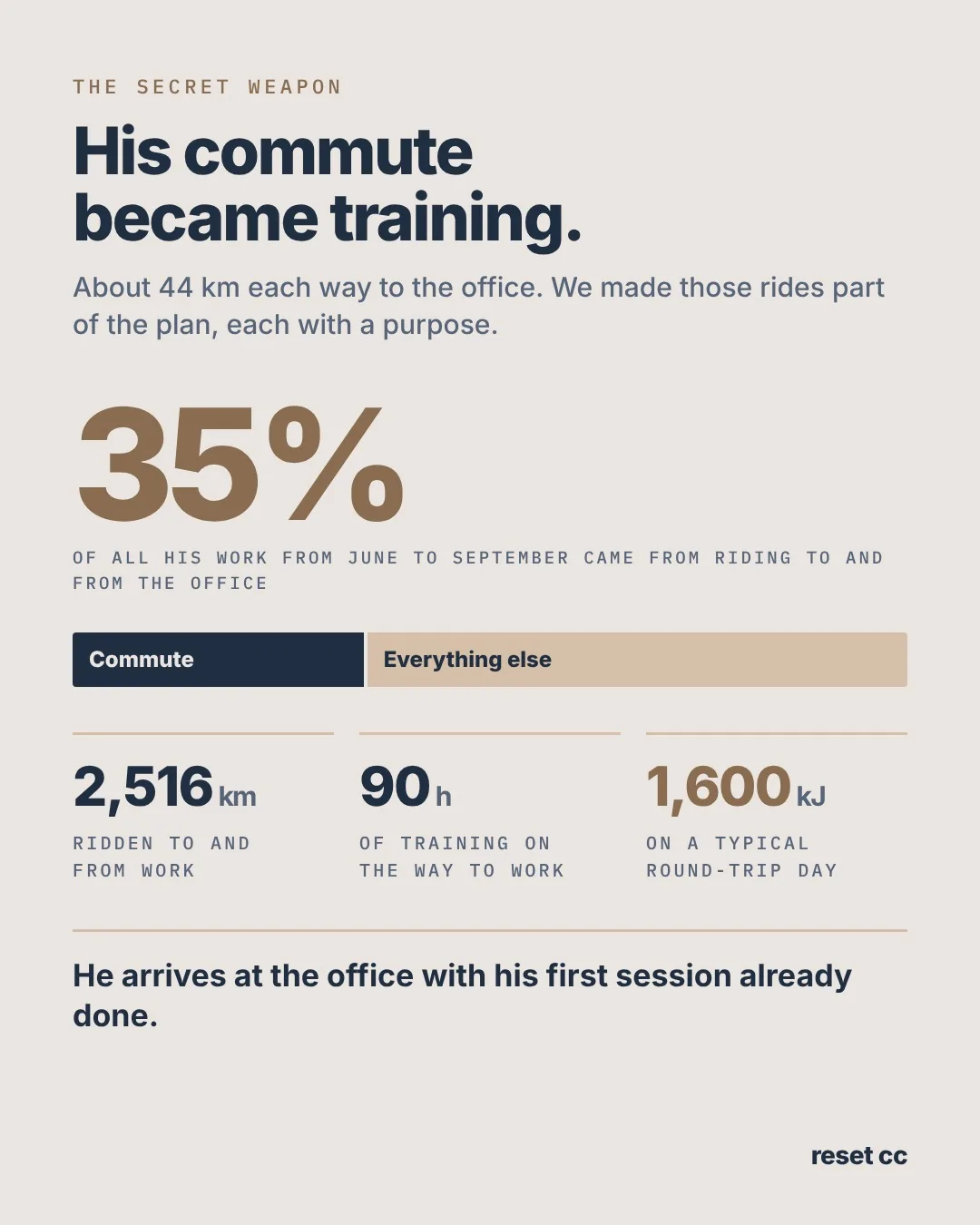
Craig’s ride to the office is about 44 km each way, and he was already doing it before he joined. We wrote it into the plan. From June to September 2026 he rode to or from work 57 times, and 49 of those rides were planned sessions with a specific job to do. Those commutes made up about a third of all his training in that period. On a day when he rode in and rode home, he covered 89 km in a little over three hours and was still at his desk on time.
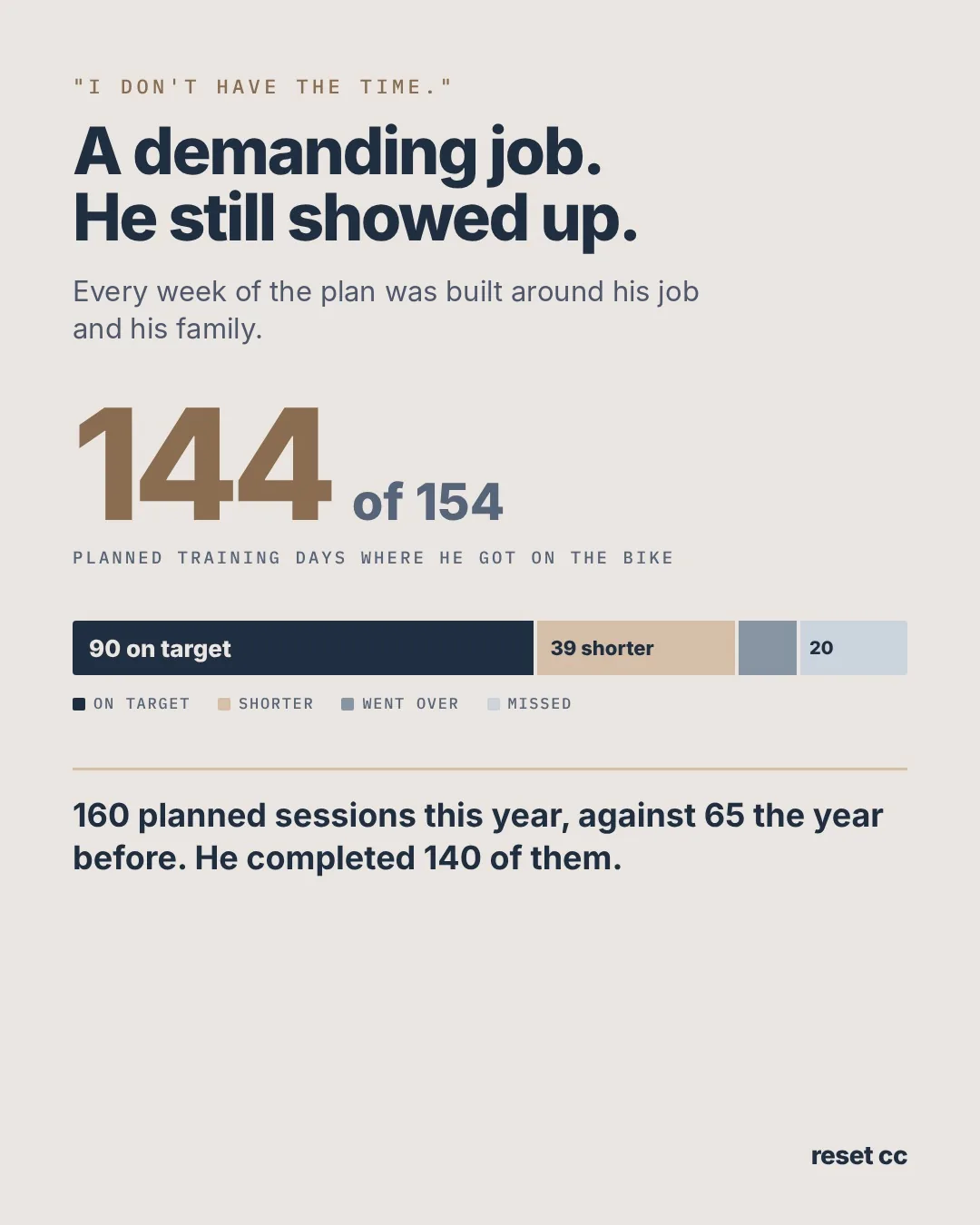
From January to early October he rode at least three hours in all 40 weeks, against 34 of 40 the year before. He did not have a single week under 1,000 kJ. Not every session went to plan. Of 160 planned sessions he completed 140, and 90 of them landed on target. On 144 of the 154 days where a ride was planned, he rode.
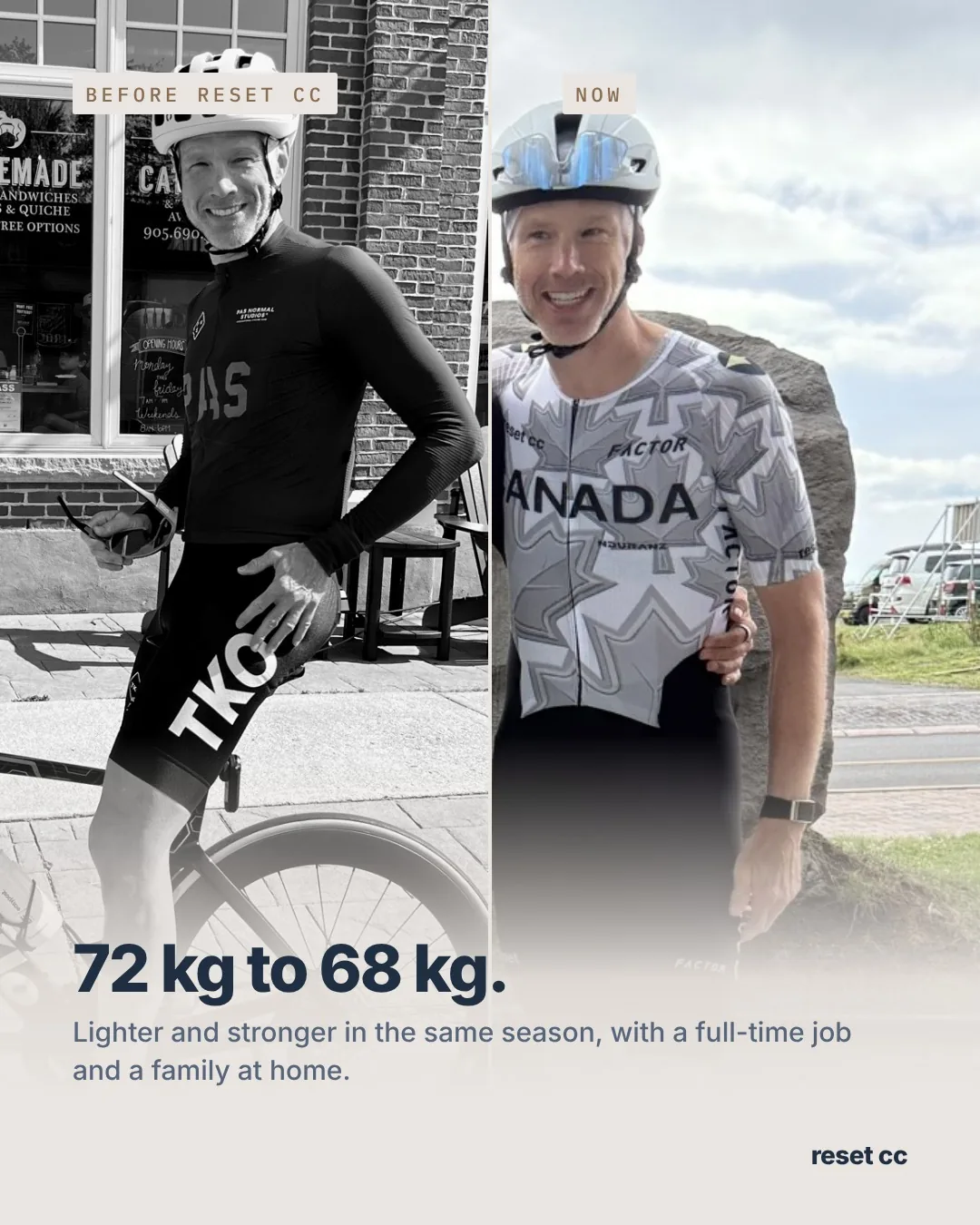
His body weight came down from about 72 kg to 68 kg while his power went up. His 20 minute power went from 3.62 to 4.35 W/kg, and he did 15 rides over four hours this season against 9 the year before.
The coaching behind the plan
Craig’s cycling, strength and nutrition were all written by his coach, Zack Morris, so all three worked toward the same dates. The strength work supported the training load, and the nutrition plan brought his weight down while his power went up.
That coaching only works when the rider follows it, week after week.
Craig’s part
None of this happens without the rider. Craig had to turn up on the mornings when it would have been easier not to, and keep the plan going through busy weeks at work and at home. He did that for a whole season.
We asked him at the Millars camp why he puts himself through it.
“There’s a lot of things in life that are harder than cycling. Being a father. Being a husband. Even sometimes at work, it can get hard. So doing something really hard and focusing your mind on that effort allows you to escape from those other challenges for a while and unplug.”
How he qualified for Worlds, then raced for Canada
In March, Craig came to the reset cc race camp at The Millars Gran Fondo in Spain, a UCI Gran Fondo World Series event, and qualified for the World Championships. We wrote about that week in Inside the reset team’s week at the Millars Gran Fondo.
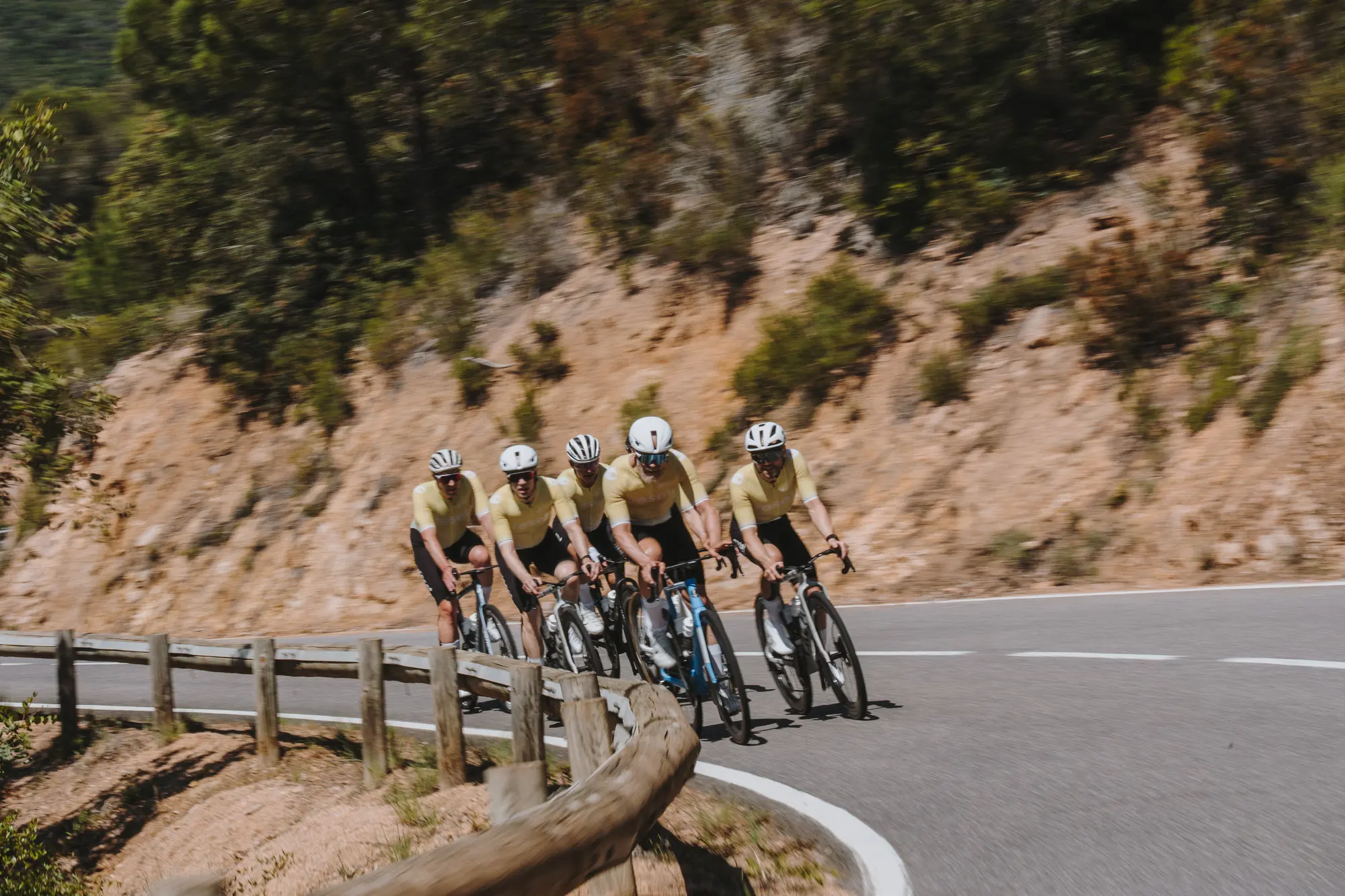
In May he was back with the team at the reset cc camp in Girona, building toward Worlds.
In August he raced the UCI Gran Fondo World Championships in Japan for Canada. He kept going after that, and in early October he had a good ride at the European Championships.
Coach’s note
“Craig is a great example for his peers, his colleagues and his family. He has always worked hard. What changed this year was clarity of direction. The roadmap we built showed him that his goals were possible, and exactly which steps and commitments they would take. He took every one of them and lived out the season he had dreamed of. That is inspiring.”
Zack Morris, founder and head coach, reset cc
Why reset cc is built this way
Craig’s season is what reset cc is built to do. Our riders get world-class coaching from some of the most experienced coaches in the sport, covering their training, strength and nutrition. Around that coaching, we give masters athletes the support and structure a World Tour rider gets across a full season: a roadmap with a destination, race camps where the team trains and races together, and a plan for every block in between.
All of it is built around the UCI Gran Fondo World Series. If you have a big job, a family, and a goal you keep pushing to next year, Craig’s season shows what the right direction can do with the hours you already have. See how reset cc membership works.
Questions riders ask about Gran Fondo Worlds
How do you qualify for the UCI Gran Fondo World Championships?
You race a UCI Gran Fondo World Series qualifying event and finish in the top 25% of your age and gender category. Craig qualified this way at The Millars Gran Fondo in Spain in March 2026. Our complete qualification guide for masters cyclists covers the process in detail.
Can you train for Gran Fondo Worlds with a full-time job and a family?
Yes. Craig averaged about 11 hours a week on the bike, and from June to September about a third of his training came from riding to and from work. What made it work was a plan built around his week, with every session tied to one goal.
How long does it take to go from joining to racing Worlds?
For Craig it took about nine months. He joined reset cc in November 2025, qualified in March 2026 and raced the World Championships in Japan in August 2026.
What does reset cc do?
reset cc coaches masters athletes for the UCI Gran Fondo World Series. Riders get training, strength and nutrition coaching, plus support and structure across the whole season: a roadmap, team race camps, and racing together at World Series events.
About the author
Zack Morris is the founder and head coach of reset cc, based in Girona, Spain. He worked for a World Tour team, where he built, launched and ran Team EF Coaching for five years. Before that, he built and scaled CINCH Cycling in Colorado. As a rider he won the Criterium National as an elite, won the masters national time trial title in 2023, and took silver in the time trial at the 2026 UCI Gran Fondo World Championships in Niseko. He has coached riders to national titles, World Championships and gran fondo wins.
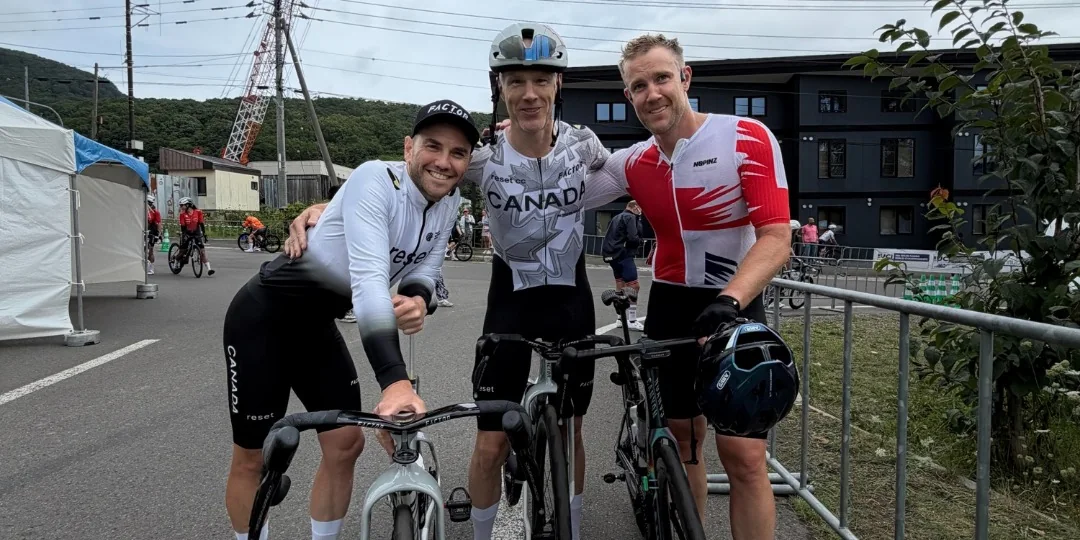
Craig trains with reset cc. If you are a masters rider with your sights on the World Series, we’d like to hear from you.