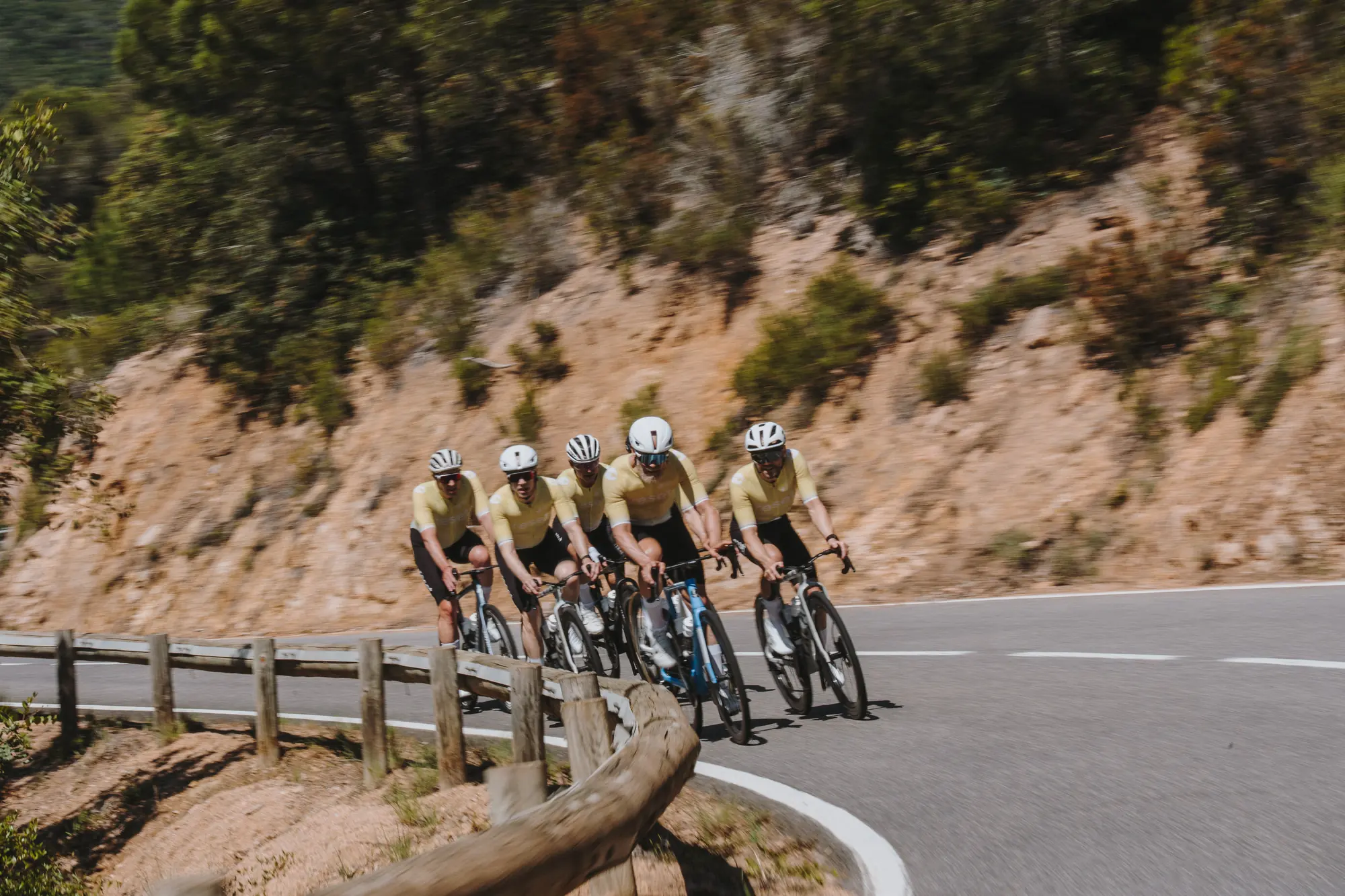
I had the perfect plan for 2026. I was on target to win the UCI Gran Fondo World Championships, I was progressing better than I ever had, and honestly, I felt like nothing could hold me back.
Then on 3 May I crashed out of The Traka while I was riding alone at the front, and I broke my collarbone. It was completely out of my control, and it changed everything about my season.
I still went to Niseko in August and raced the world championships. I came home with a silver medal in the M35-39 time trial and 13th in the road race. I wasn’t at my best, and I wasn’t in the best situation. I made the most of the one I had, and this is the story of how that happened.
It was also the first year of reset cc, so this season meant a lot more to me than my own results.
My 2026 season · click through it
From gravel in February to Niseko in August
Numbers from my power files and the official results.
01 / 09
Feb
Gravel with Factor Racing
Santa Vall and the Castellón Gravel Race to open the year, riding with the Factor Racing gravel team.
3rd
Santa Vall, after crashing twice
8th
Castellón, with a broken derailleur for the last 10 km
The perfect plan
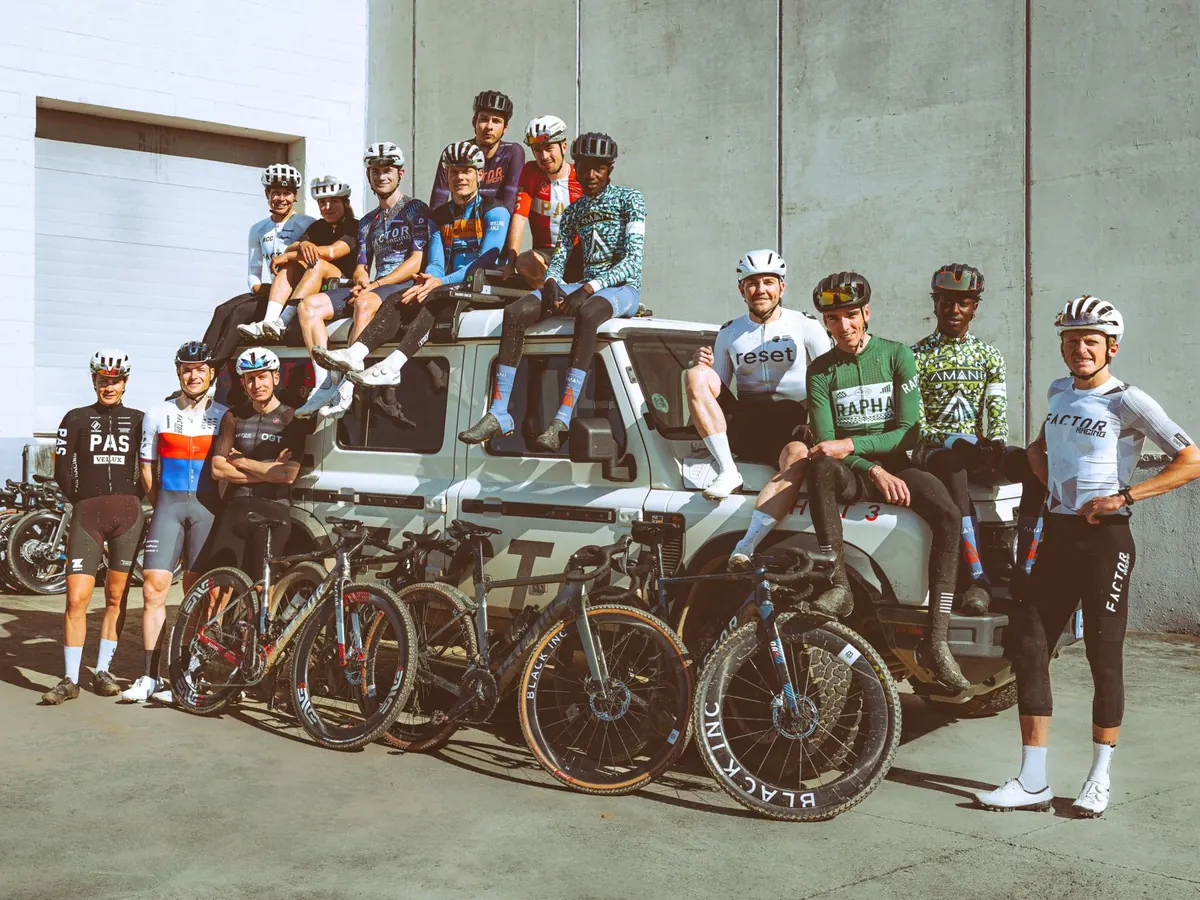
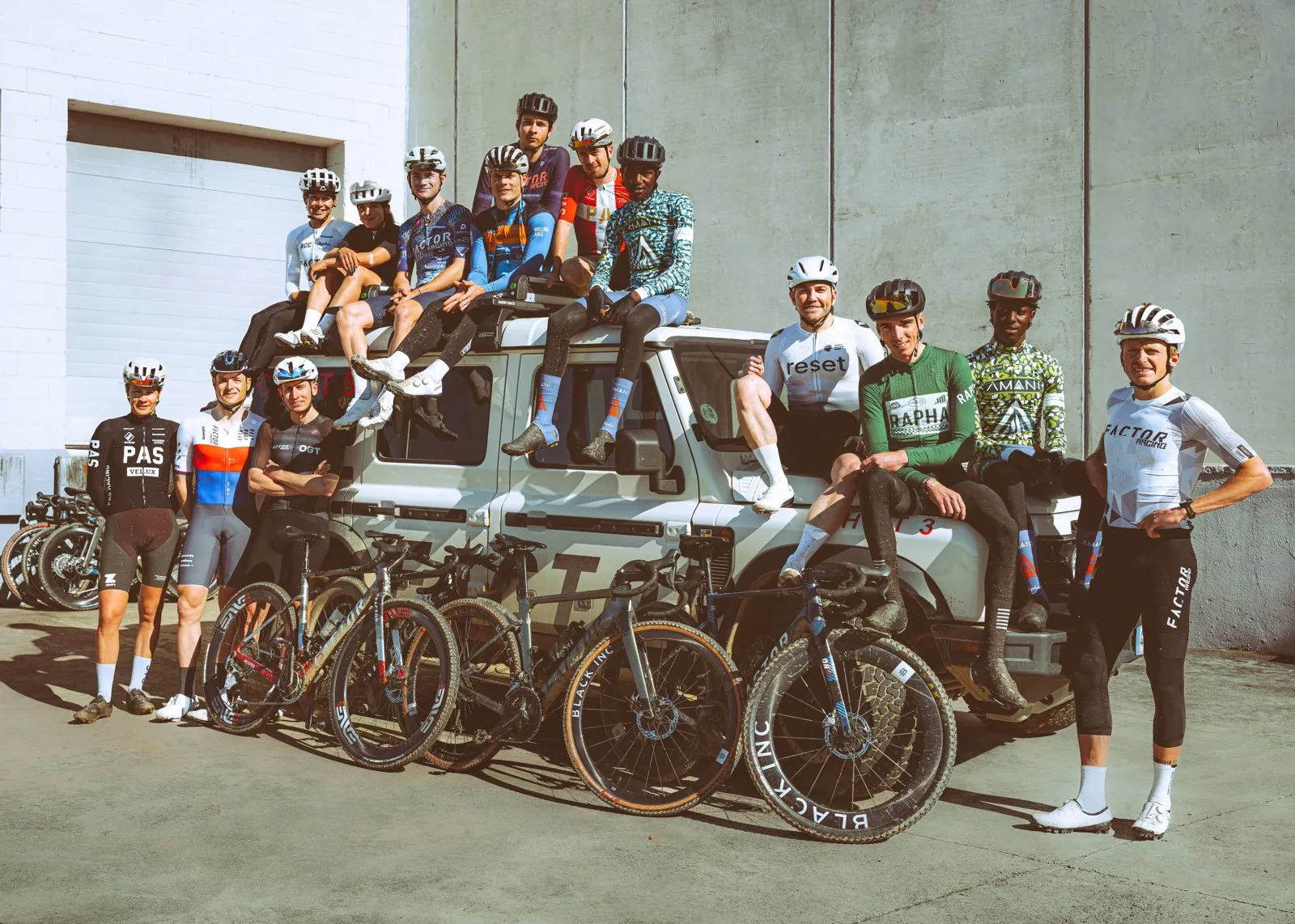
I started the year on gravel with the Factor Racing gravel team. I was racing alongside Romain Bardet, and alongside Magnus Bak Klaris, who went on to win the UCI Gravel World Championships in October. That was pretty cool, and pretty unique for me. (Disclosure: I’m a Factor Bikes ambassador.)
Photo: with Romain Bardet, Magnus Bak Klaris, Jonas Lindberg and the rest of the Factor Racing gravel team in Girona, 12 February.
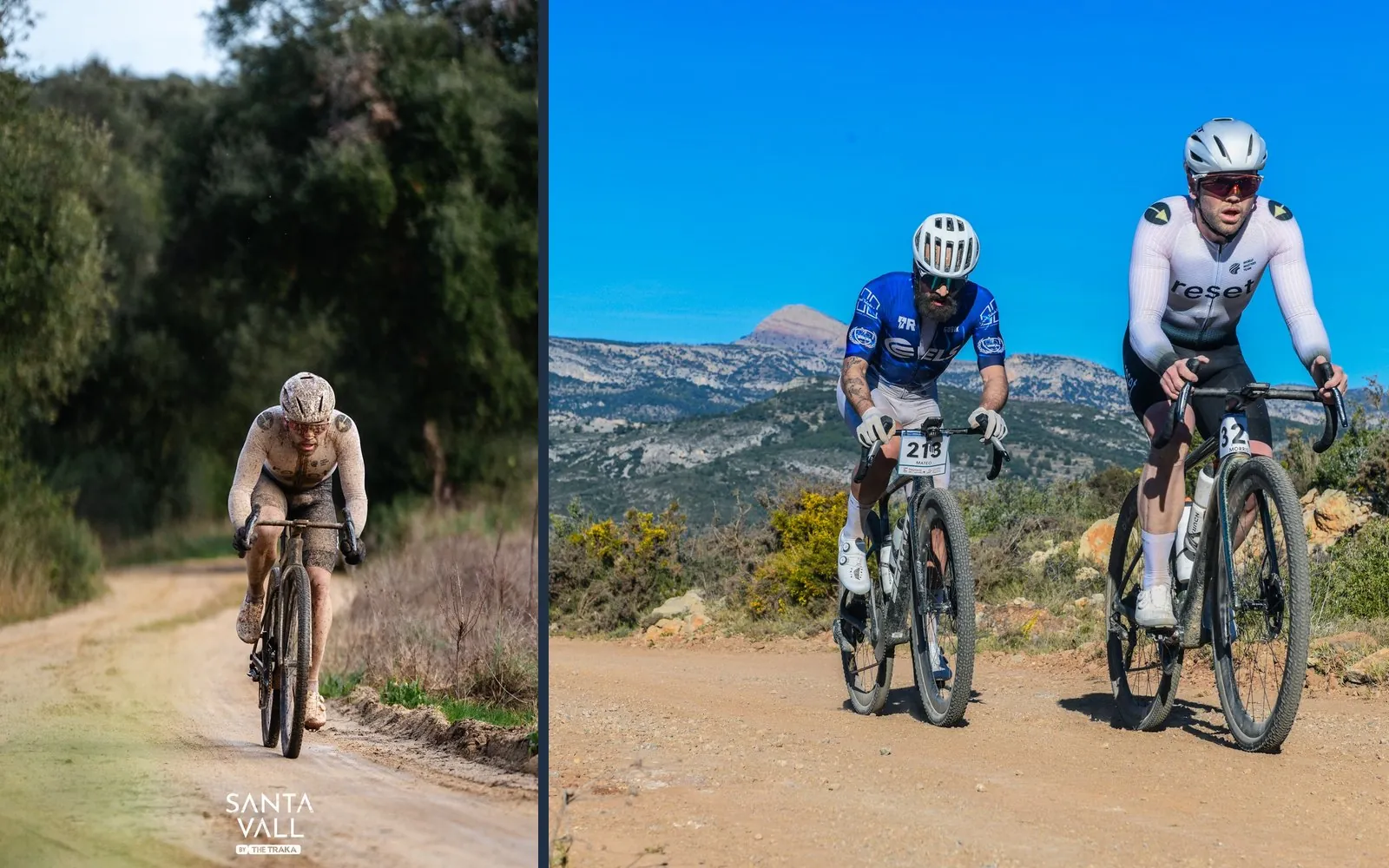
Santa Vall was two days of racing on the roads around Girona that I ride every week. The first stage was the hardest thing I’ve ever done on a bike, in deep mud with a couple of wrong turns. Somehow it was still fun. I crashed twice and still finished third. A week later I raced the Castellón Gravel Race in the hills above Llucena. With 10 km to go I broke my derailleur and was stuck in my smallest gear, and I finished eighth. Crashes and bad luck turned out to be the theme of my season.
Photos: Santa Vall stage 1 (left) and the Castellón Gravel Race (right).
In March we took the team to The Millars in Castellón for our first reset cc race camp. We reconned the course together and raced it together. I didn’t race for my own result there. I worked for our guys, and Juan, Craig and Marko all qualified for Worlds in their first season with us.
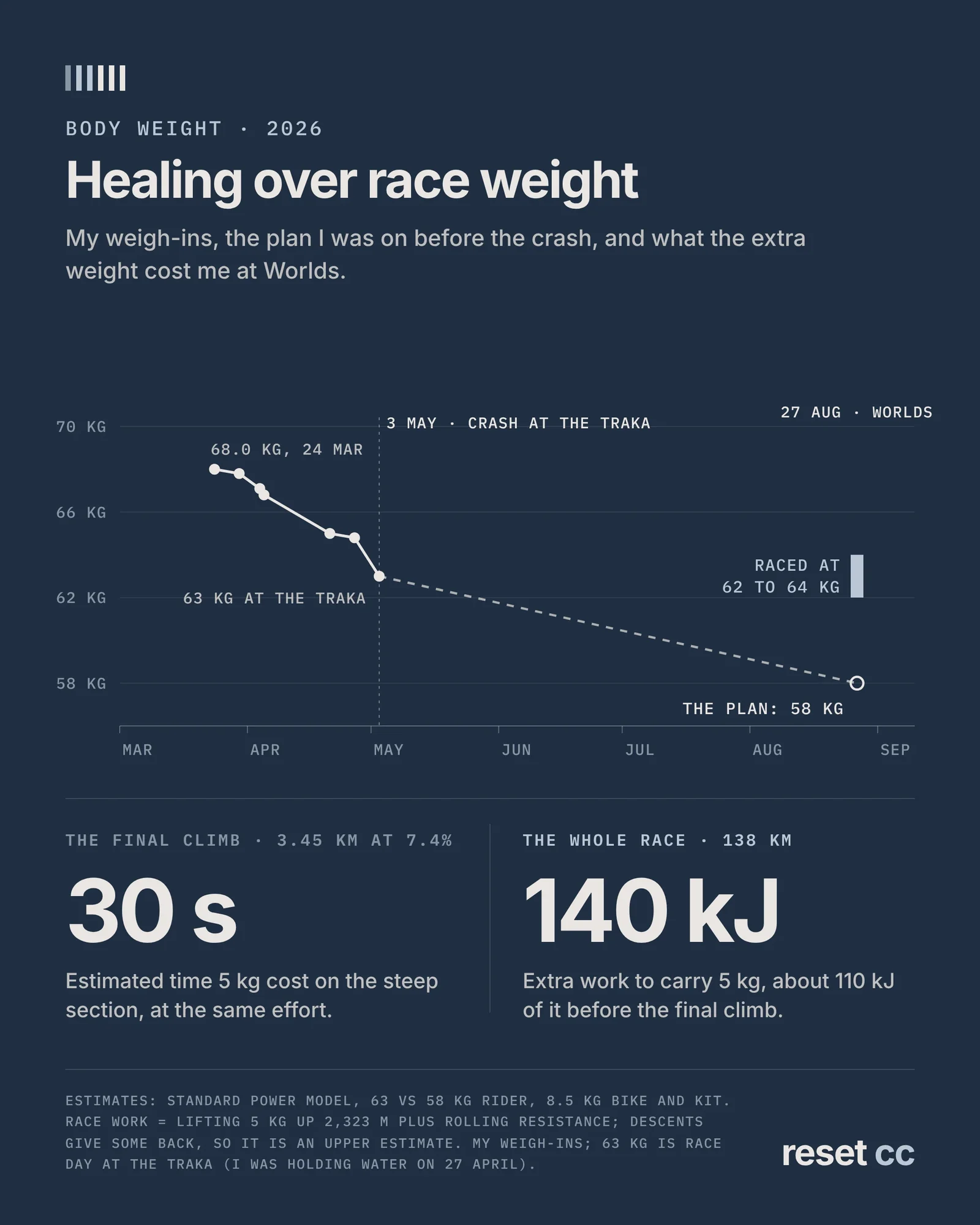
From there I went into another training block and started to sharpen up for The Traka. Everything was clicking. April brought the biggest training weeks of my spring, and my weight was coming down right on schedule with the same “output is the budget” approach all of our athletes use. I raced The Traka at 63 kg, and I was on track to race Worlds at 58.
The Traka
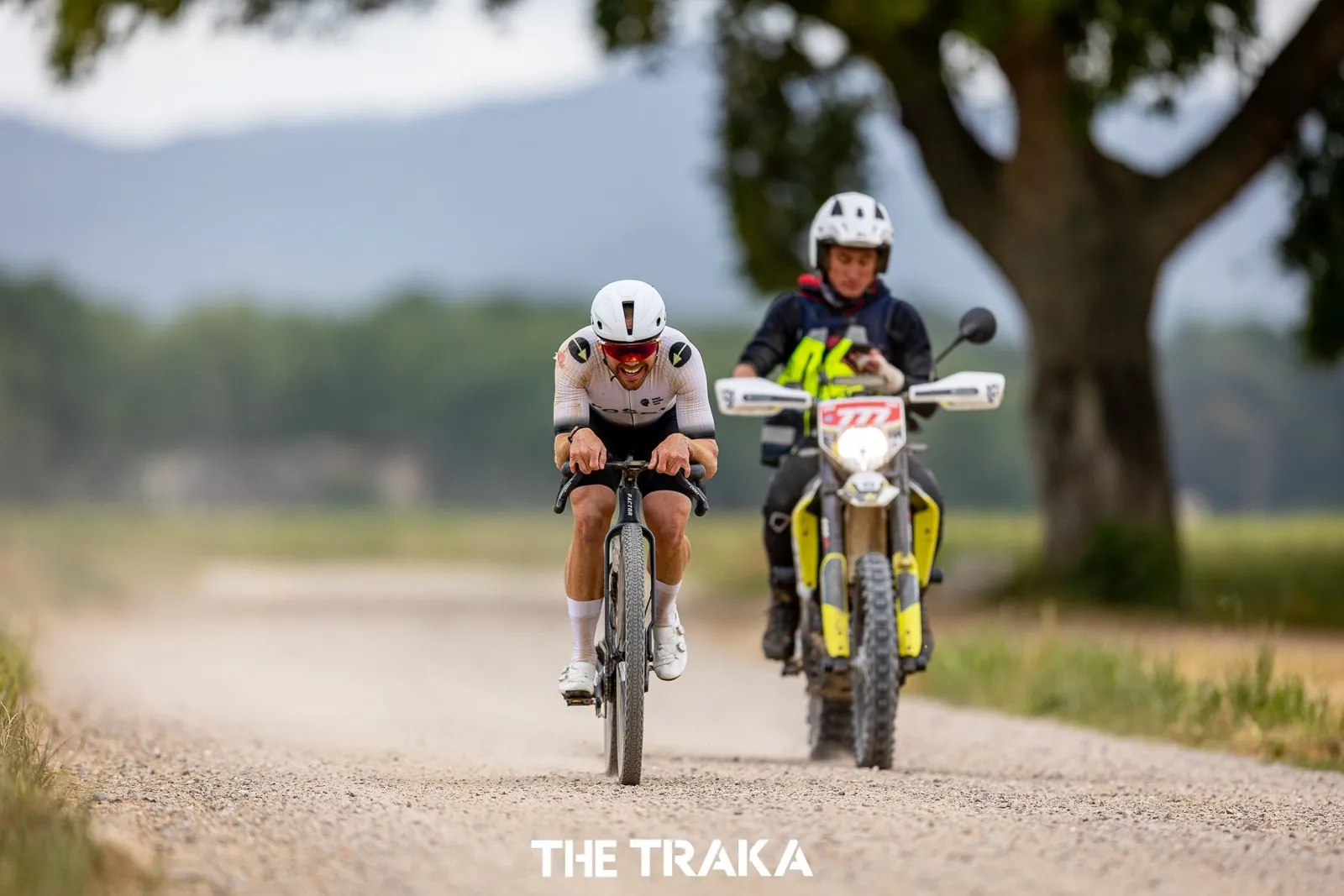
The Traka on 3 May was the first big target of my year, and I was in phenomenal shape. I dropped everybody and was riding alone at the front, winning the race. For the 1 hour and 52 minutes I raced, my normalized power was 313 W. Normalized power weights the surges in a race, so it gives a truer picture of what an effort cost than average power does.
Then, 54 km in, I crashed on my own and broke my collarbone.
Photo: alone at the front of The Traka, 3 May.
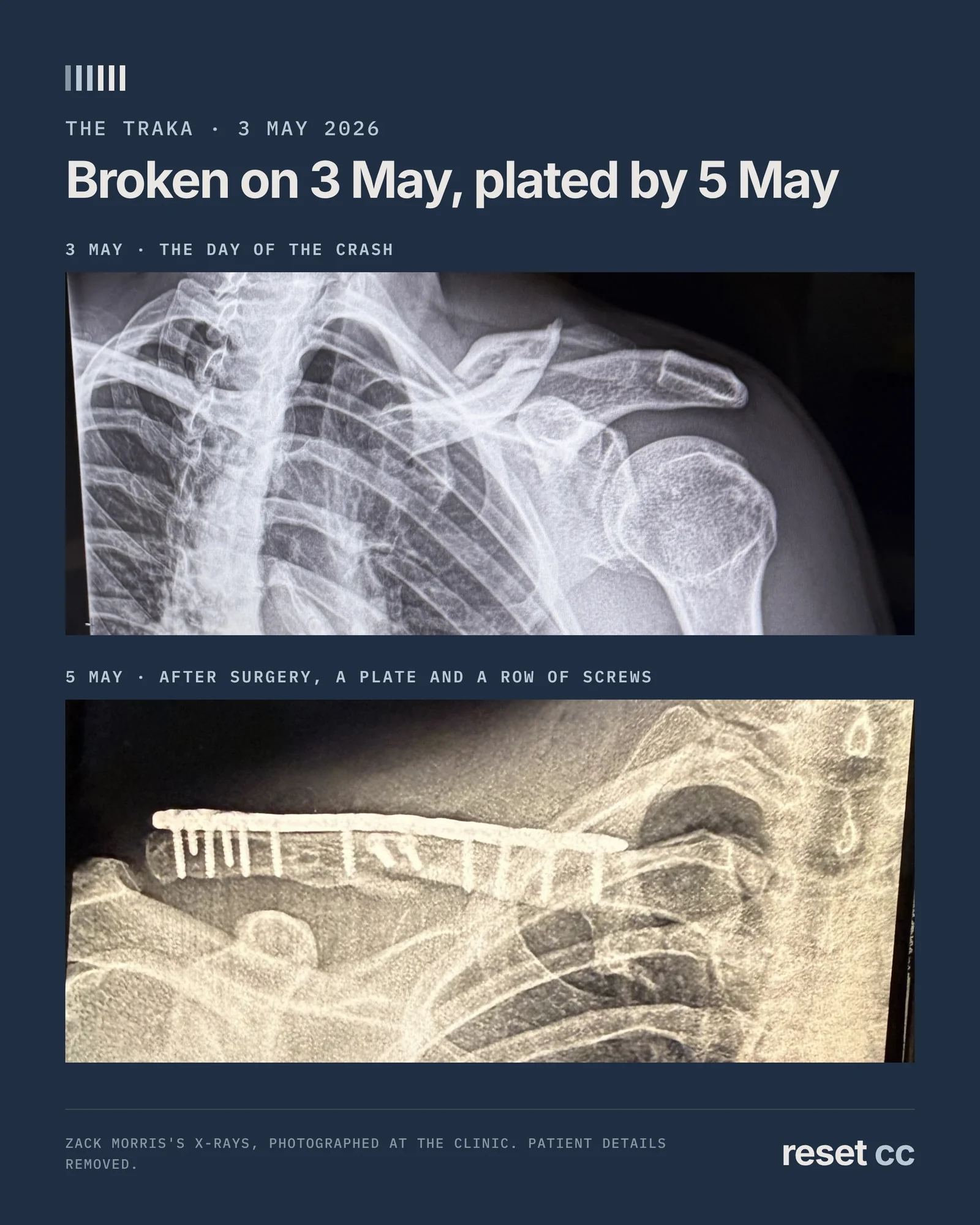
The break was a bad one: a lateral clavicle fracture, at the outer end of the collarbone near the shoulder. It needed a plate and a row of screws, and it left me in a really vulnerable position.
Three weeks to camp
The reset cc Girona camp was three weeks away, and it became my North Star. Riders were flying in from all over the world to train with me in Girona, and the idea that I could miss that week with them was devastating. Having that camp on the calendar was exactly the pressure I needed to get my act together.
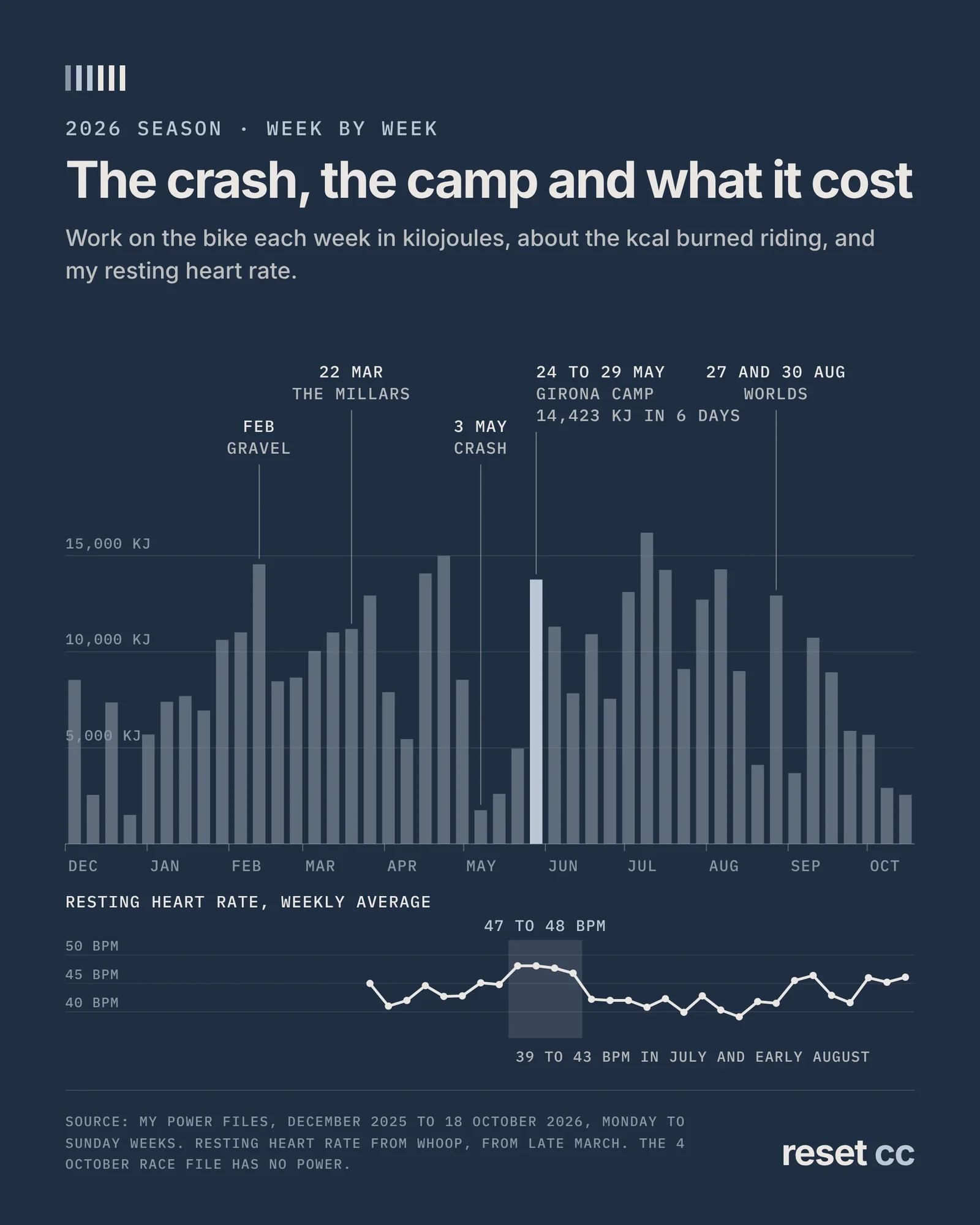
Four days after the crash I was on Zwift for an easy hour. My first ride outside was on 17 May, my 38th birthday. In the 20 days between the crash and the camp I rode 14 hours, most of it short spins indoors.
Then we did the camp: six days, 704 km, 8,988 m of climbing and 25 hours 35 minutes on the bike, three weeks after I broke my collarbone. It was absolutely insane, and I wouldn’t trade that week with the guys for anything.
To be clear, that’s not a timeline I’d recommend to anyone. When you get back on the bike after a fracture is a decision for you and your surgeon.
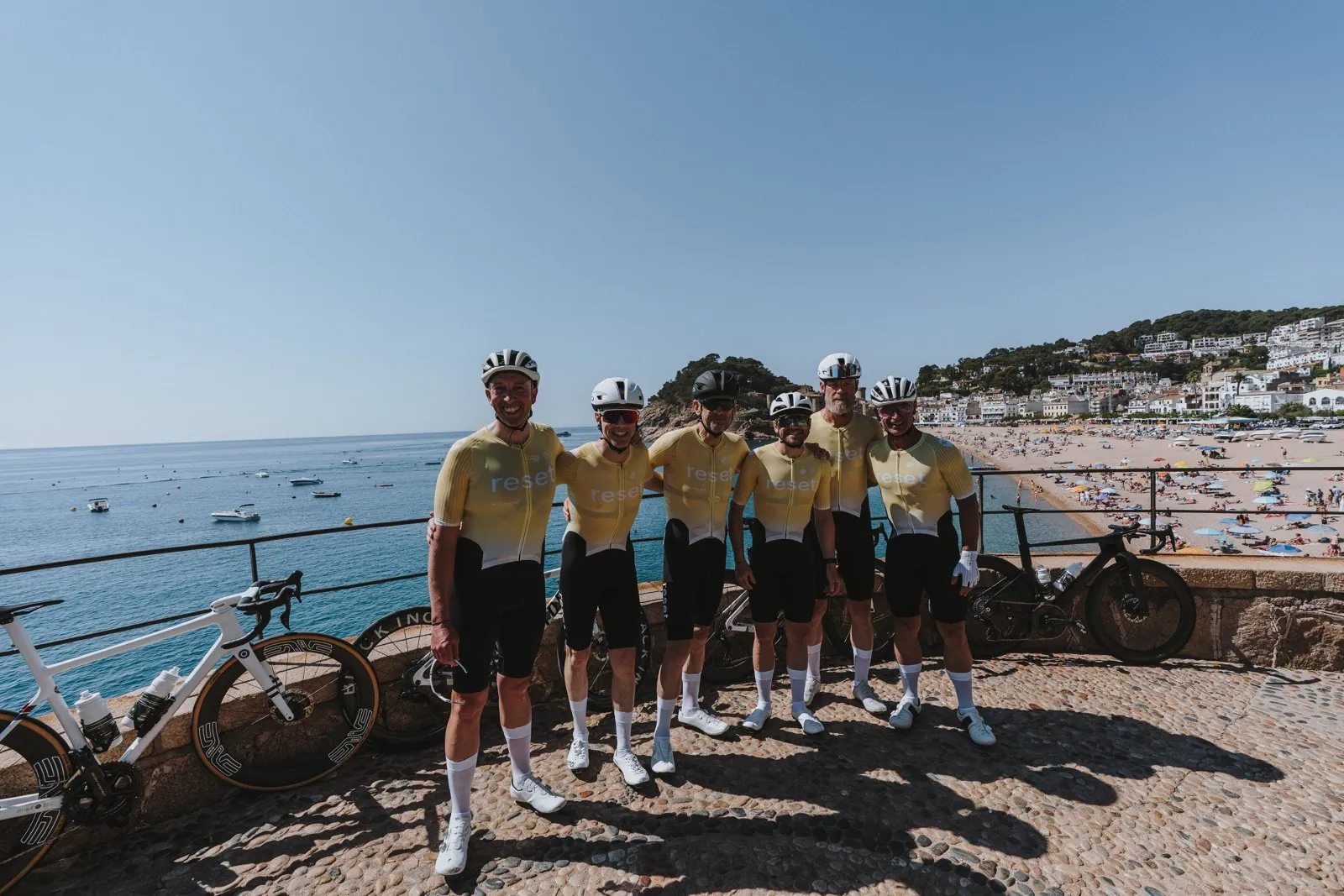
Photo: the team at Tossa de Mar during the Girona camp.
Paying for it
I paid for that week, and you can see it in the data. For four weeks, from the week before the camp to the middle of June, my resting heart rate on my WHOOP averaged 47 to 48 beats per minute. Through July and early August, when I was training harder than at any point in the year, it sat between 39 and 43.
Those weeks were a dark place. My level wasn’t coming back, and I honestly wasn’t sure I’d be ready for Worlds. The break was slow to heal, and it was keeping me in a real energy deficit.
What turned it around was food. About five days after the crash I’d come out of my body composition goals and structure and started eating in a calorie surplus so the bone could heal. Sticking with that surplus was the only thing that started to make me feel better. The research backs the principle of not under-eating while you’re injured. A review of nutrition for injured athletes recommends avoiding energy deficiency and calls energy balance critical (expert review, Evidence C).
The cost was weight. I had been on track to race Worlds at 58 kg. I showed up somewhere between 62 and 64.
Full gas to Worlds
Once I felt better, I didn’t take my foot off the gas. I’d made a huge sacrifice to come back for the camp, and from there I felt like I was under the gun and didn’t have a single day to waste. In the 12 weeks from the camp to my taper I averaged 20.1 hours a week on the bike, against 15.4 hours a week from January to The Traka. My biggest week of the year, 27.7 hours, came in July.
It paid off. Between June and August, starting seven weeks after I broke my collarbone, I set all-time power PRs at every duration from 10 minutes to 90 minutes.
All of it went into the road race. I was focused on volume and on getting my weight back down, so I never had the chance to work on my time trial.
Niseko
If I could change one thing about the whole season, I’d have gone to Japan earlier. I arrived on 21 August, six days before the time trial.
The time trial: silver
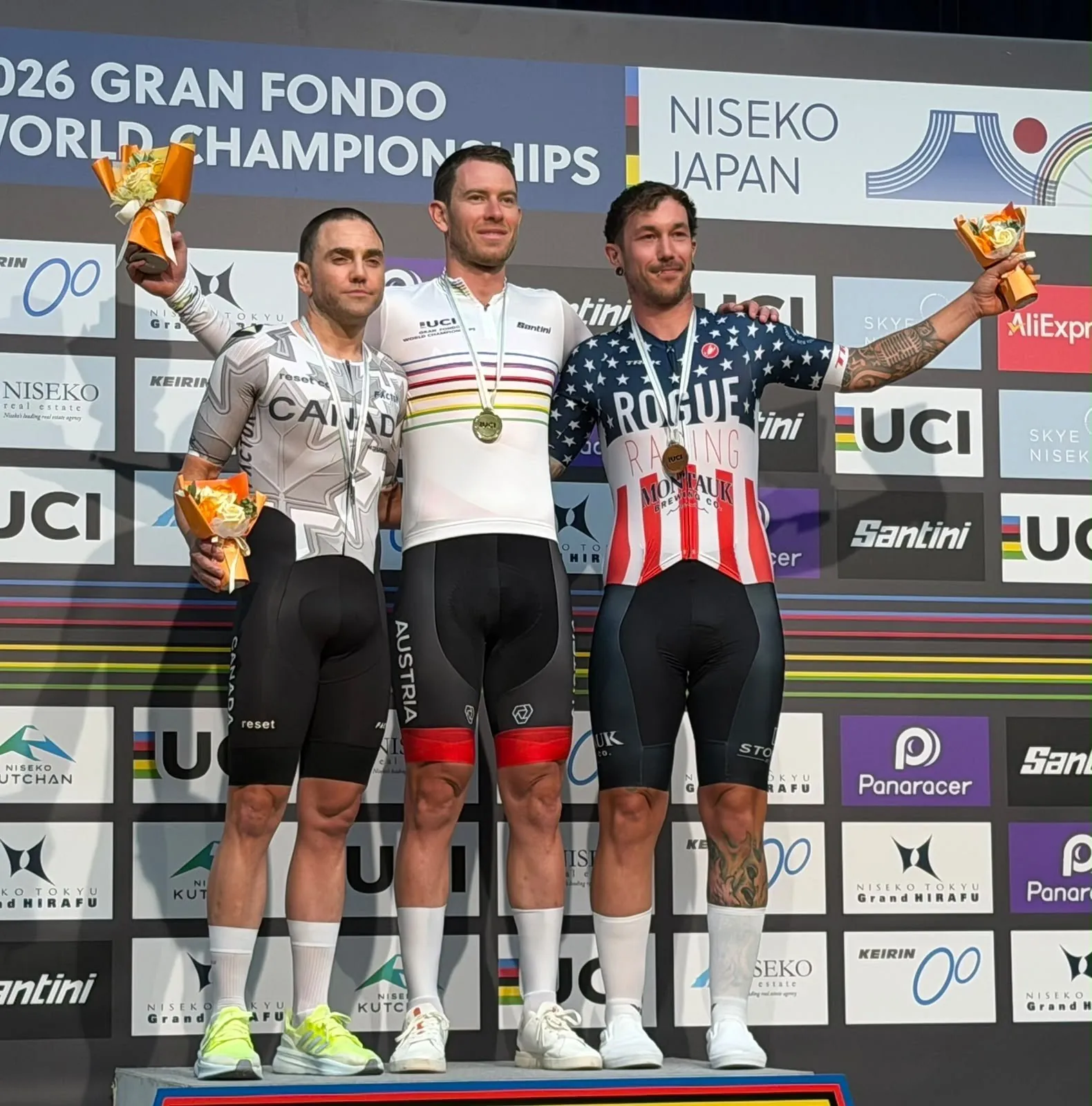
The time trial came first, on 27 August, over a mostly flat 15 km. I finished second in M35-39. It’s a medal I’m really proud of, and an amazing accomplishment given where I was in May.
It wasn’t a great day, though. The injury took away my chance to prepare for the time trial. When I came back, every bit of my focus was on the road race, so I never got to do the specific work I’d normally put into a TT performance.
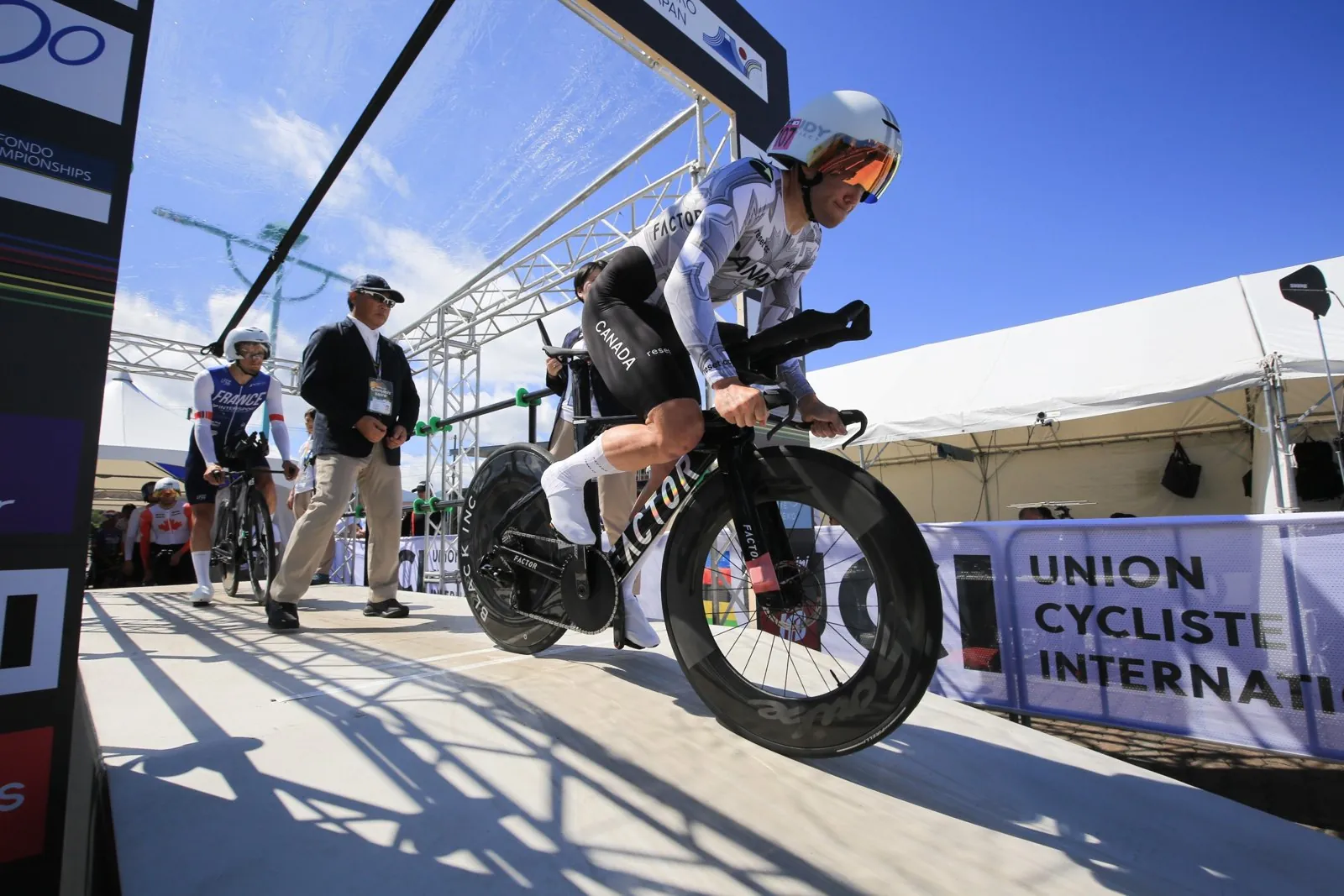
Photo: the time trial start ramp in Niseko, 27 August.
Photo: the M35-39 time trial podium.
The road race: 13th
Three days later was the road race: 139.5 km, with the decisive climb in the last 20 km. The day before, I had diarrhea and went to the bathroom something like ten times, and I raced with stomach cramps all day.
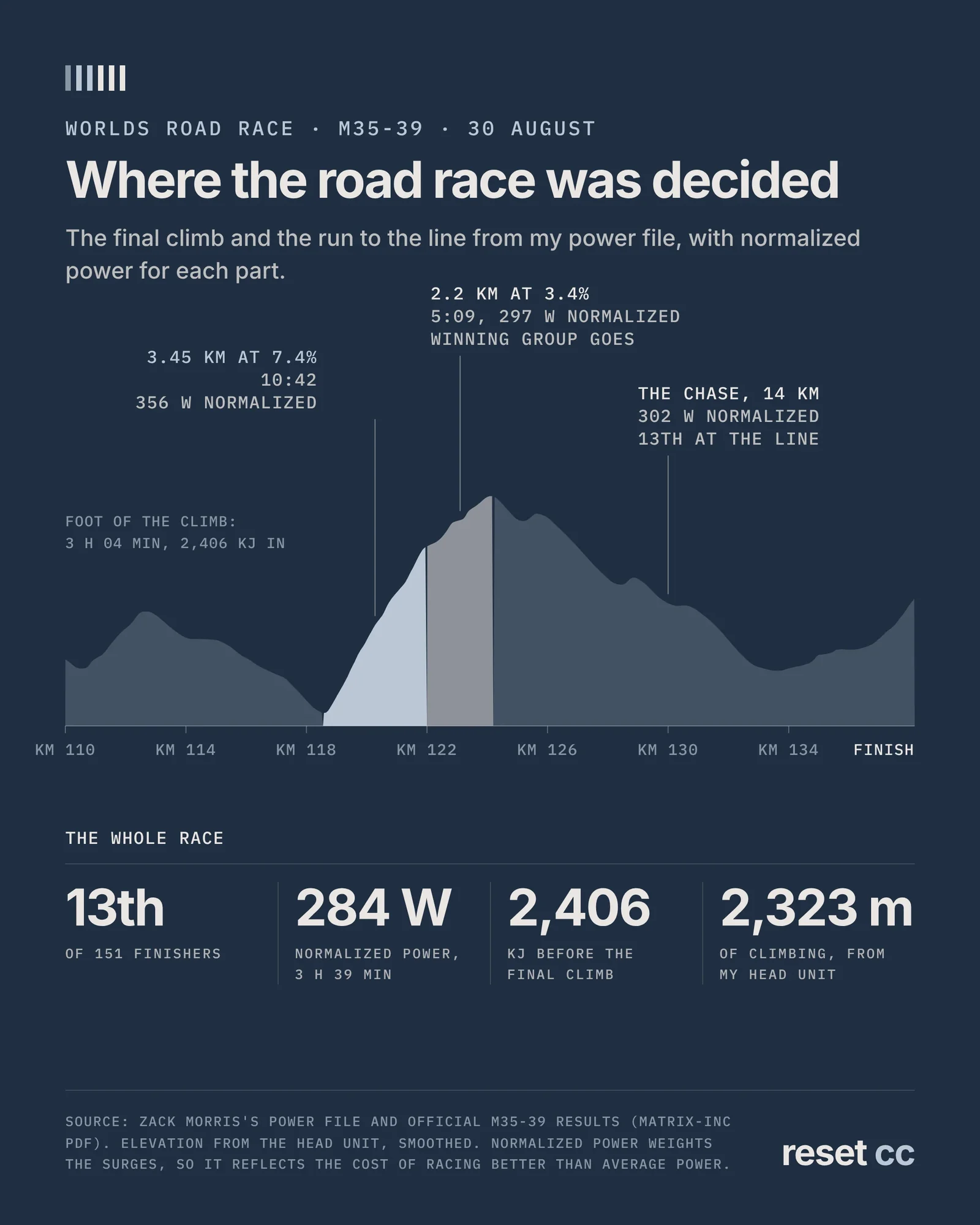
I still raced well. I was one of the strongest guys in the race, and I reached the bottom of the final climb with the front of the race. I rode the steep first 3.45 km, at 7.4%, in 10 minutes 42 seconds at a normalized power of 356 W. Then the road eased to about 3.4% for the last 2.2 km, and that’s where I didn’t have it. I couldn’t go up and over that zone of steady pace, and that’s where the guys who won got away.
From the top, Daniel Hochstrasser, who won the time trial, and I were the only two driving the chase. I rode the last 14 km at a normalized power of 302 W with the rest of the group sitting on, and at the line I got rolled by everyone who’d been sitting in. I finished 13th of 151. It was a devastating day.
What 5 kg really cost me
It’s easy to think about extra weight only on the final climb, and it did cost me there. At the same effort, 5 kg less would have been worth about 30 seconds on that steep 3.45 km (estimate).
The bigger cost is the whole race, and how you arrive at the final climb. Carrying 5 kg more over 138 km and 2,300 m of climbing adds roughly 140 kJ of work, and about 110 kJ of that comes before the final climb (estimate). That’s about six minutes of riding at 300 W, spent before the race was decided. Some of it comes back as extra speed on the descents, so treat it as an upper estimate.
What this season taught me
I don’t have any regrets about this season, apart from wishing I hadn’t broken my collarbone. I did everything I could with what I had. The plan broke, and I still committed to what I’d committed to, which was a world championship performance. I wasn’t in the best situation, but I made the most of a bad one, and I’m proud of that.
I learned a lot about myself this year, and I built a lot of mental fortitude. I got into the best shape of my life at 38. I got to race a world championship with Craig and Benji and watch them live out their dreams. And I made a lot of friends and, I hope, inspired a lot of people on the internet along the way. I’m grateful for every lesson this year taught me, personally and professionally.
Year one of reset cc
This was also the first year of reset cc. We launched in December 2025, and I wanted 2026 to be the year we put our flag in the ground and showed everyone at reset cc that they belong on the podium at world championships. We did that, and I’m so proud of it.
I’m the head coach, but I don’t sit behind a desk telling everybody what to do. I live, eat and breathe this sport. I race the same events, train the same way and fuel the same way our athletes do, and that’s why I’m so passionate about them getting the most out of themselves.
You can see it in the level of our athletes. Juan, Craig and Marko qualified for Worlds in their first season. Jürgen lost more than 11 kg in his first season. Kenny, Artemas, Scott and so many others have completely transformed their body composition, their ability as riders and, for a lot of them, their lives.
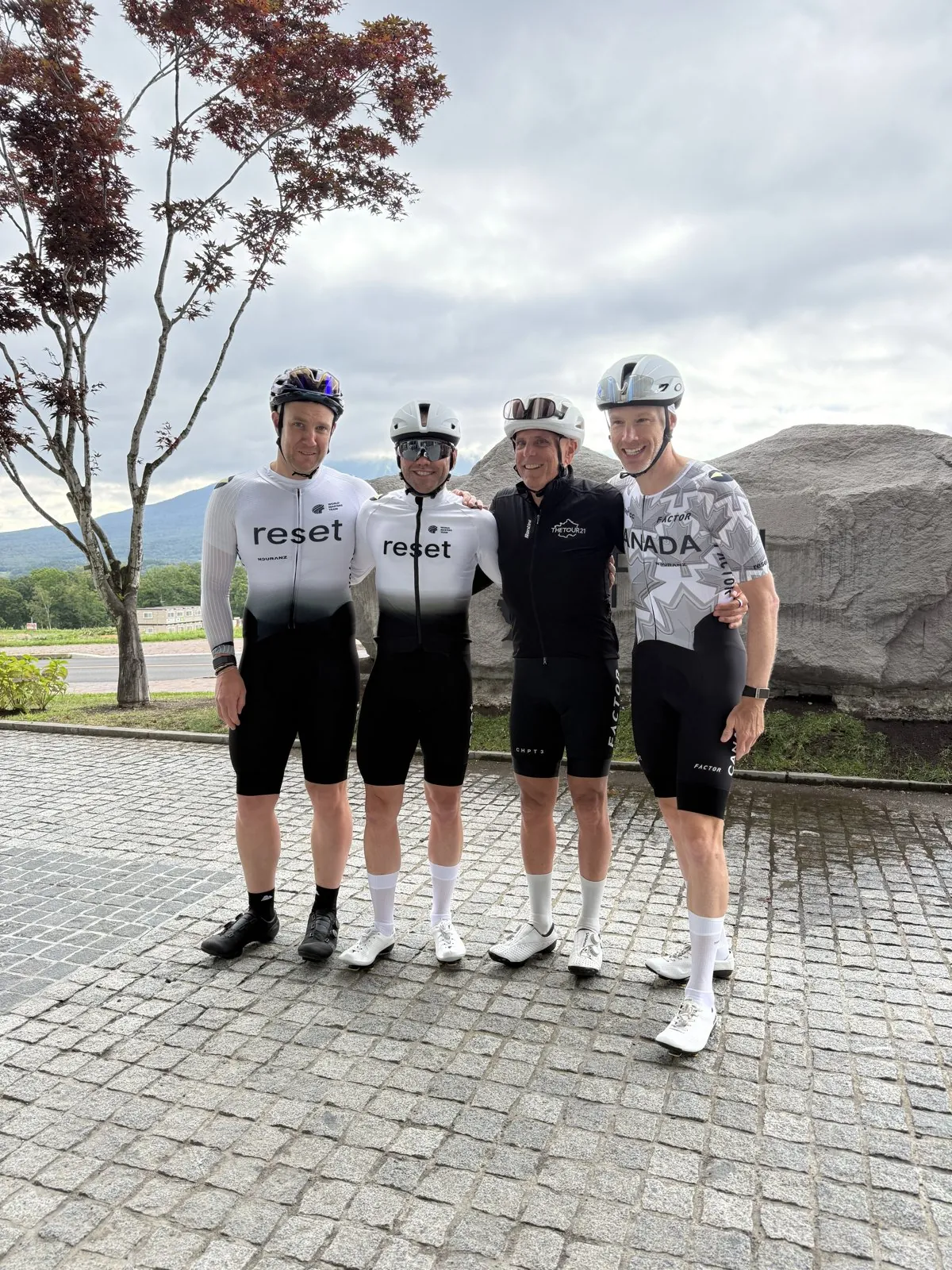
Photo: Craig, Benji and me in Niseko.
That’s what it’s all about for me: being a coach who lives it, so I can give our athletes the tools, resources and support they need to improve their lives wherever they are in the world. Coming together at our camps this year was absolutely amazing.
Most of the athletes I coach will have something go wrong next season. It might be an injury, a crunch at work or a sick kid in race week. What I hope they take from my year is that a broken plan doesn’t have to mean a lost season.
Coaching and membership · 2027 season
Race 2027 with the team
Our riders are coached online from home and come together to race the World Series at our camps, with a coach who races the same events. If you'd rather have coaching on its own, that's the second card.
Team membership · 2027 season
Race the 2027 season with the team
Three levels, from one team camp to the whole season on the road to Worlds. Every level includes:
✓Your own reset cc coach
✓Strength and nutrition
✓Two calls a month
✓Your roadmap to Worlds
✓The Girona block
✓The full custom team kit
+Team Rider and Full Season add the team bike and more race camps
I’m still racing, and I’m super focused on the world championships. The goal is to be in the best shape of my life and to be a contender in both the road race and the time trial.