The Fit CEO: Juergen Veith and the Ride That Most People Will Never Understand
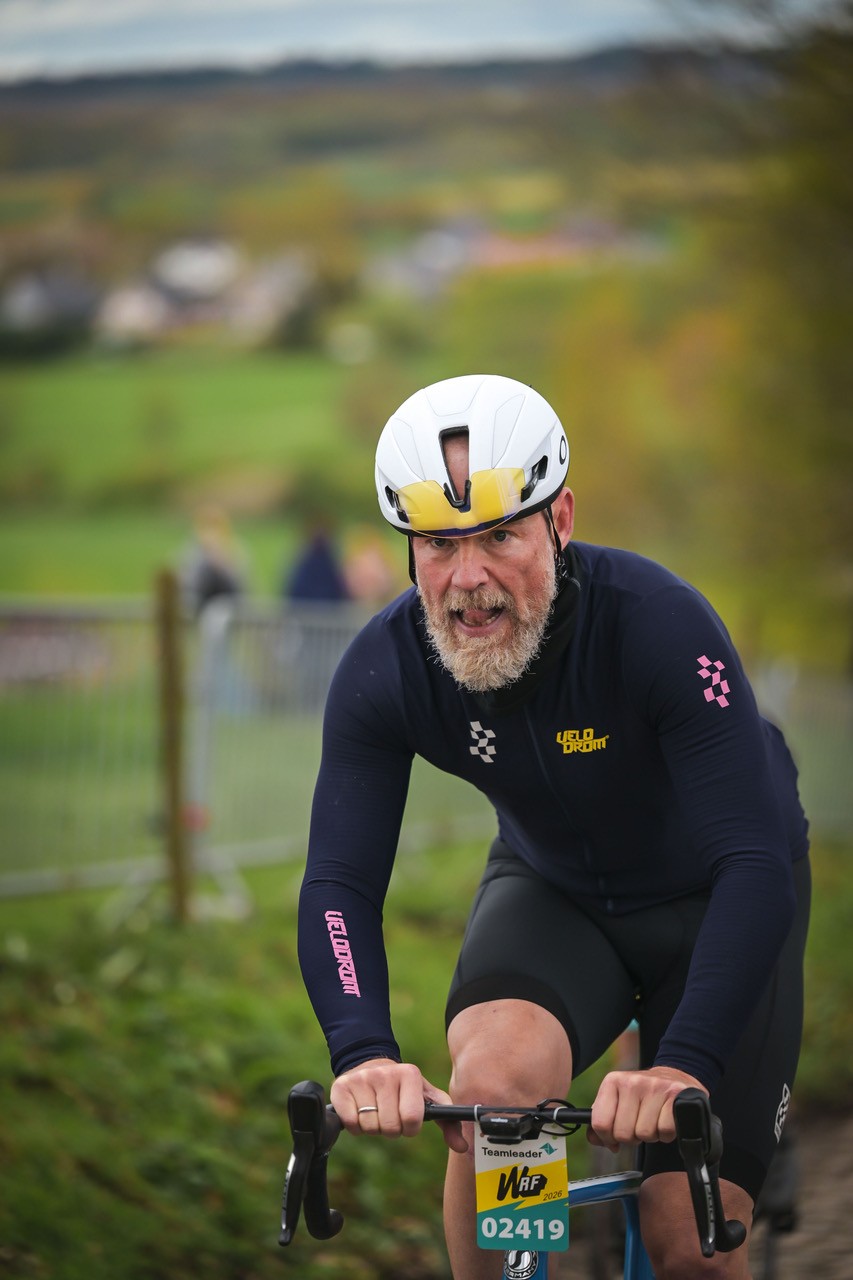
There is a particular kind of person who looks at the Tour of Flanders, the cobblestones, the short savage climbs of the Oude Kwaremont and the Paterberg, the biting Belgian spring wind, and thinks: I want to do that.
And then there is a rarer kind of person who actually does it.
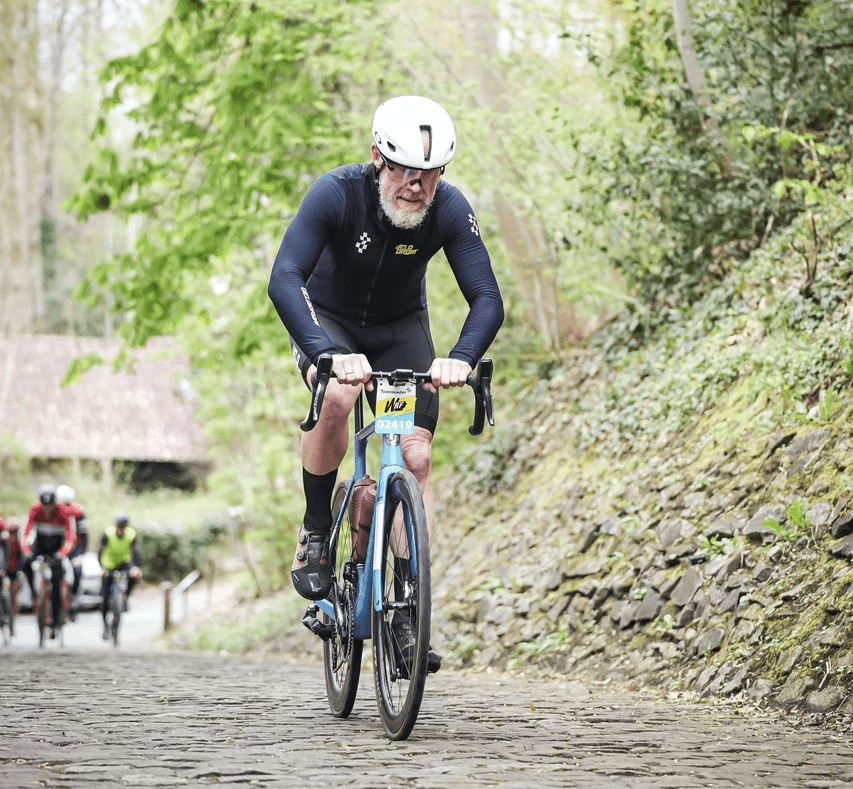
Juergen Veith is that kind of person.
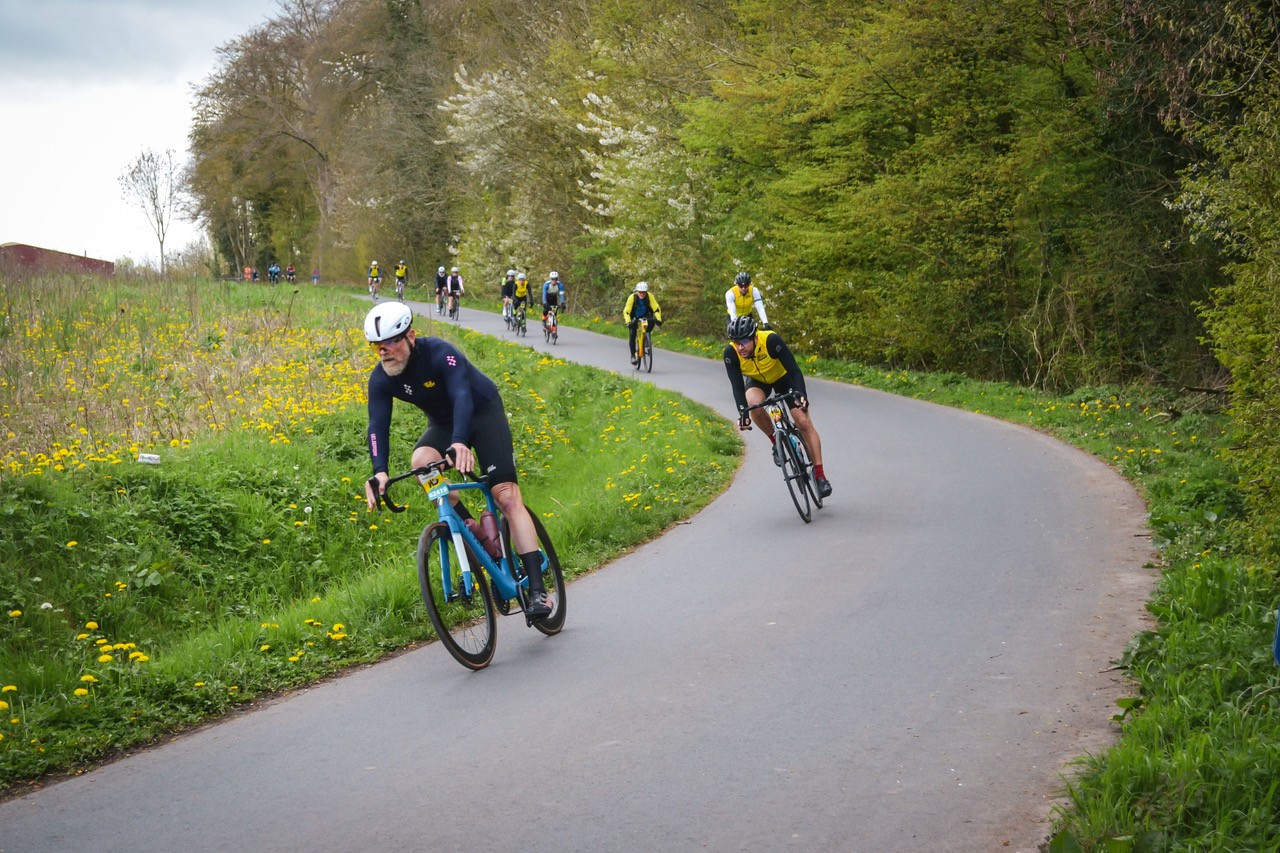
Last Sunday, the 58-year-old from Germany rolled across the finish line of the 248km Flanders Classic Challenge, one of cycling's most iconic amateur endurance events, in 7 hours and 50 minutes. He burned more than 6,400 kilojoules in the process, an output so staggering it's hard to put into ordinary language. But let's try.
The average office worker burns around 110 to 120 calories walking to work. Juergen's Sunday ride burned the equivalent of more than 55 of those walks. In a single day. On a bike. Over roads that have been punishing professional cyclists for over a century.
He did this at 58 years old. And he's just getting started.
The Man Behind the Number
Juergen is a CEO who runs a company alongside his life as an athlete. He has commitments that pull hard on his time and energy. And yet, quietly and consistently, he has built himself into one of the most dedicated amateur endurance cyclists you've likely never heard of.
Between 14 and 18 hours per week. That is the volume of structured, purposeful cycling training Juergen commits to. Not casual rides. Not commutes. Dedicated, coached, goal-oriented training.
For context: most recreational cyclists, people who consider themselves "into cycling," ride 5 to 8 hours a week. Juergen nearly doubles that. Every week.
The question worth asking is not how he finds the time, but why he chooses to spend it this way. The answer is clear: he is building towards something. He is proving something, not to anyone else, but to himself.
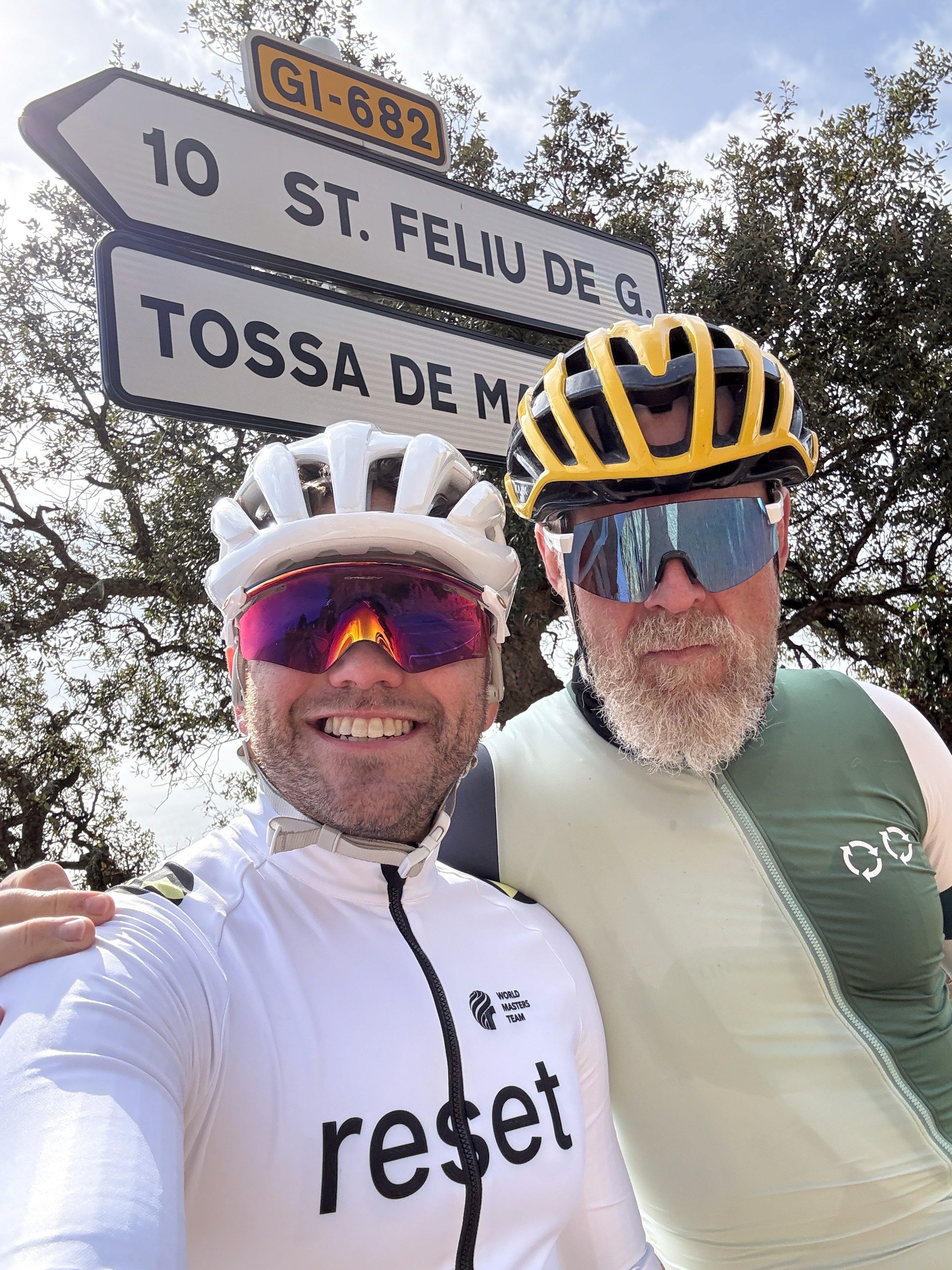
A Winter in Girona
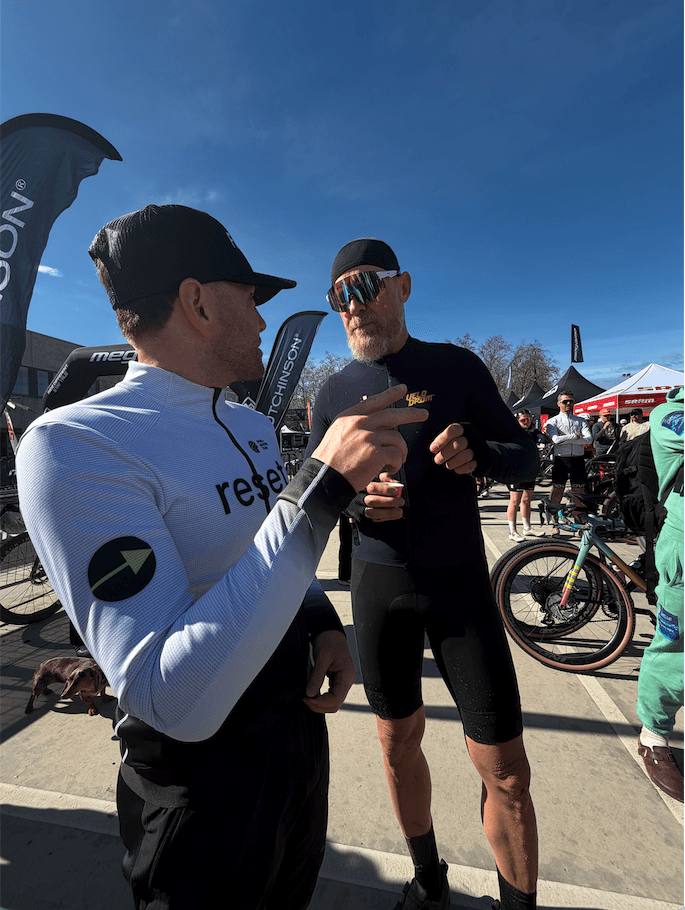
Preparation for this classics campaign didn't begin in February. It began in the long months before, in Girona, the Catalan cycling mecca where the roads climb into the hills and the riding community is as serious as anywhere in the world.
Juergen spent much of his winter there, working directly with his Reset coach on a programme built around the fundamentals that actually move the needle in endurance performance.
Metabolic flexibility, teaching the body to efficiently use fat as fuel so that over a 7-hour effort, energy reserves don't collapse. Zone 1 training and lactate efficiency, the unglamorous work of riding easy enough, long enough, to build an aerobic engine that can sustain output for nearly eight hours. Appropriate fueling, because at this level of output, nutrition is not a minor consideration — it is a performance variable. And VO2 Max development, building the physiological ceiling that determines just how hard Juergen can push when the road tips up and the pack splinters.
This is not a training plan built for a quick result. It is built for someone who wants to genuinely perform at some of the hardest amateur cycling events in the world. And it worked.
The Classics Campaign
Sunday's Flanders Classic was not a one-off adventure. It was the first of four.
The Classics Campaign:
✅ Tour of Flanders — 248km — Completed
Paris-Roubaix Challenge — The Hell of the North. Cobbled farm tracks through northern France that have ended careers and broken bikes.
Amstel Gold Race — The rolling hills of Limburg, the Dutch spring, a different kind of brutality.
Liège-Bastogne-Liège — La Doyenne. The oldest classic. 258km through the Ardennes. The hardest of them all.
Four races. Four of the most storied events on the cycling calendar. All in Juergen's 60th year on earth.
This is a classics campaign that most professional cyclists have never completed in a single spring. Juergen is attempting all four as someone who chose to spend his 58th year doing something extraordinary instead of simply getting older.
What 7 Hours and 50 Minutes Actually Means
It is worth pausing to appreciate the sheer physical reality of what Juergen completed last Sunday.
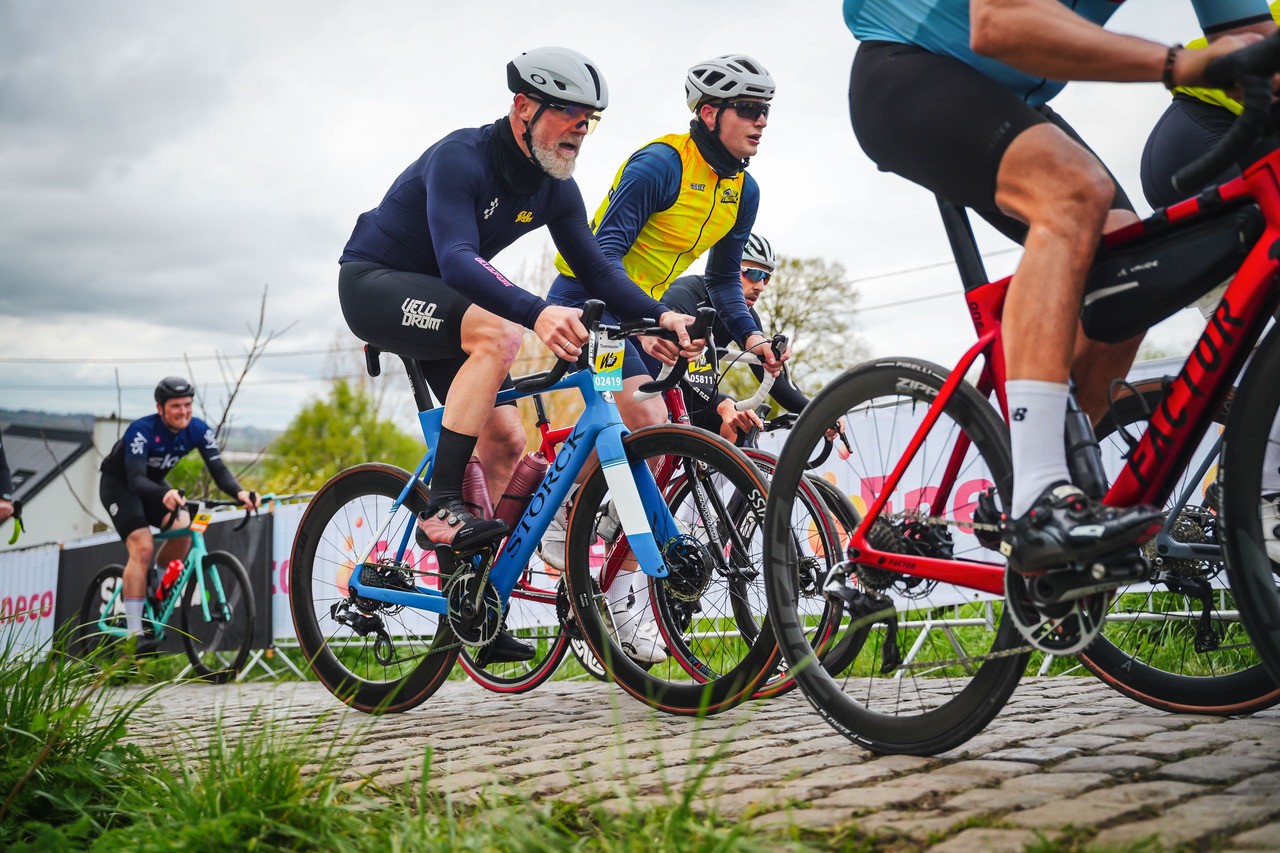
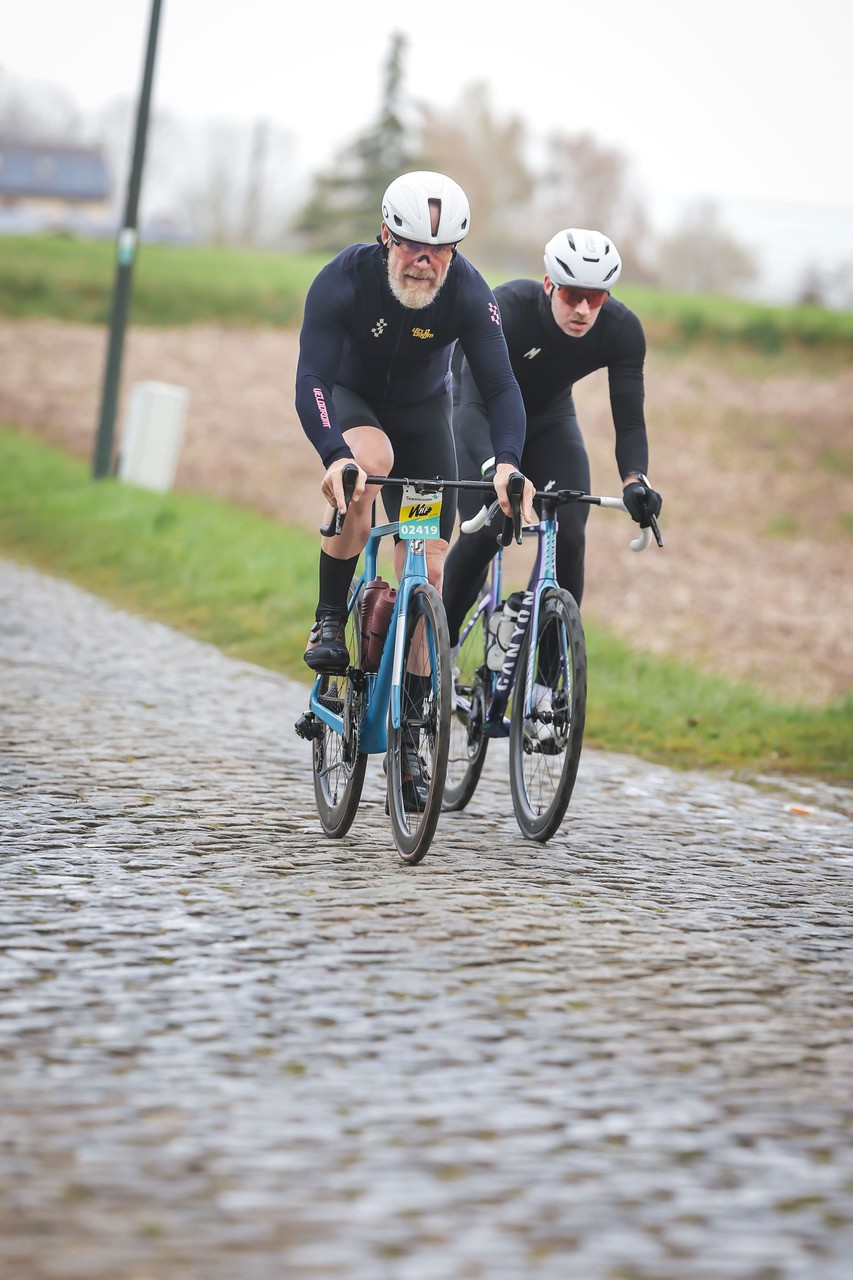
He rode for nearly eight hours. He navigated the cobbled climbs of the Wolvenberg, the Koppenbearg, Eikenberg, the Kortekeer, the Kanarieberg, the Paterberg, and the legendary Oude Kwaremont. He rode over cobblestone sectors that rattle your fillings and demand constant full-body tension just to stay upright. He did this among thousands of other riders, in Belgian spring conditions, on a blue Storck that he clearly knows how to handle.
6,400 kilojoules of work output. That number represents hours of real-time fueling decisions, years of aerobic base building, and a fitness level that most people will never come close to, let alone approach at 58.
None of this happened by accident. None of it was luck. It was the product of consistent training over a long time, of showing up week after week and putting the work in. That is what makes Sunday's result meaningful.
Almost 60, Nowhere Near Done
In August, Juergen turns 59.
In the lead-up to that milestone, he will have attempted four of cycling's most iconic classic races. He will have ridden through Flanders, through the cobbled farm tracks of northern France, through the Dutch hills, and through the Ardennes. He will have done it with preparation, intention, and the kind of fitness that most people half his age haven't built.
The cobblestones of Flanders have been ridden. Paris-Roubaix is next.
We'll be with him every kilometre of the way.
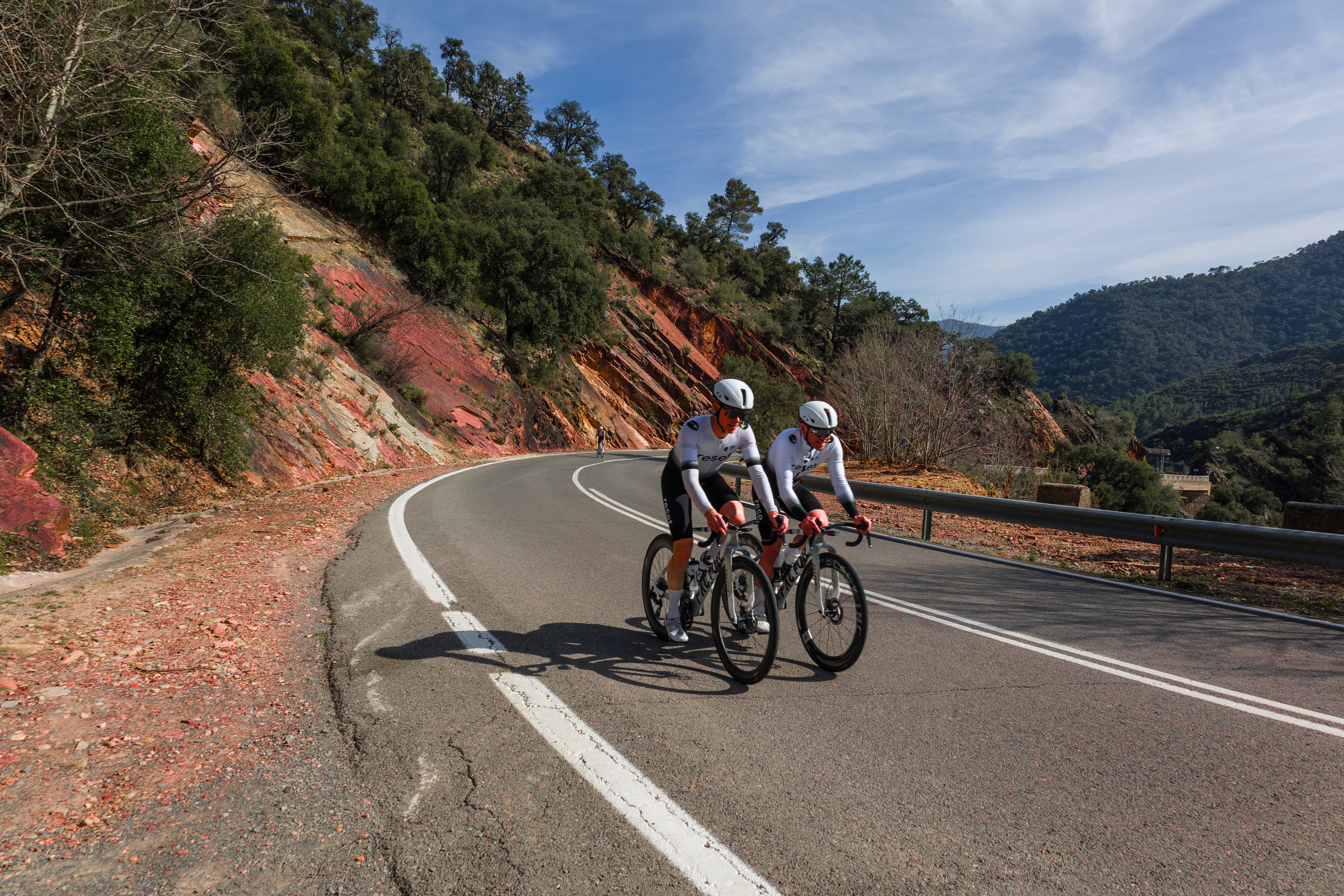
Juergen trains with Reset CC. If you're a driven individual who wants to know what your body is actually capable of, we'd love to talk.