How One Athlete Lost 30 Pounds and Increased His Threshold Power by 70 Watts in Eight Months

This is not a 30-day transformation story.
There was no detox. No extreme diet. No sudden breakthrough moment where everything magically clicked. What you see in these photos is the result of eight months of structured work, imperfect consistency, and a system that respected real life instead of fighting against it.
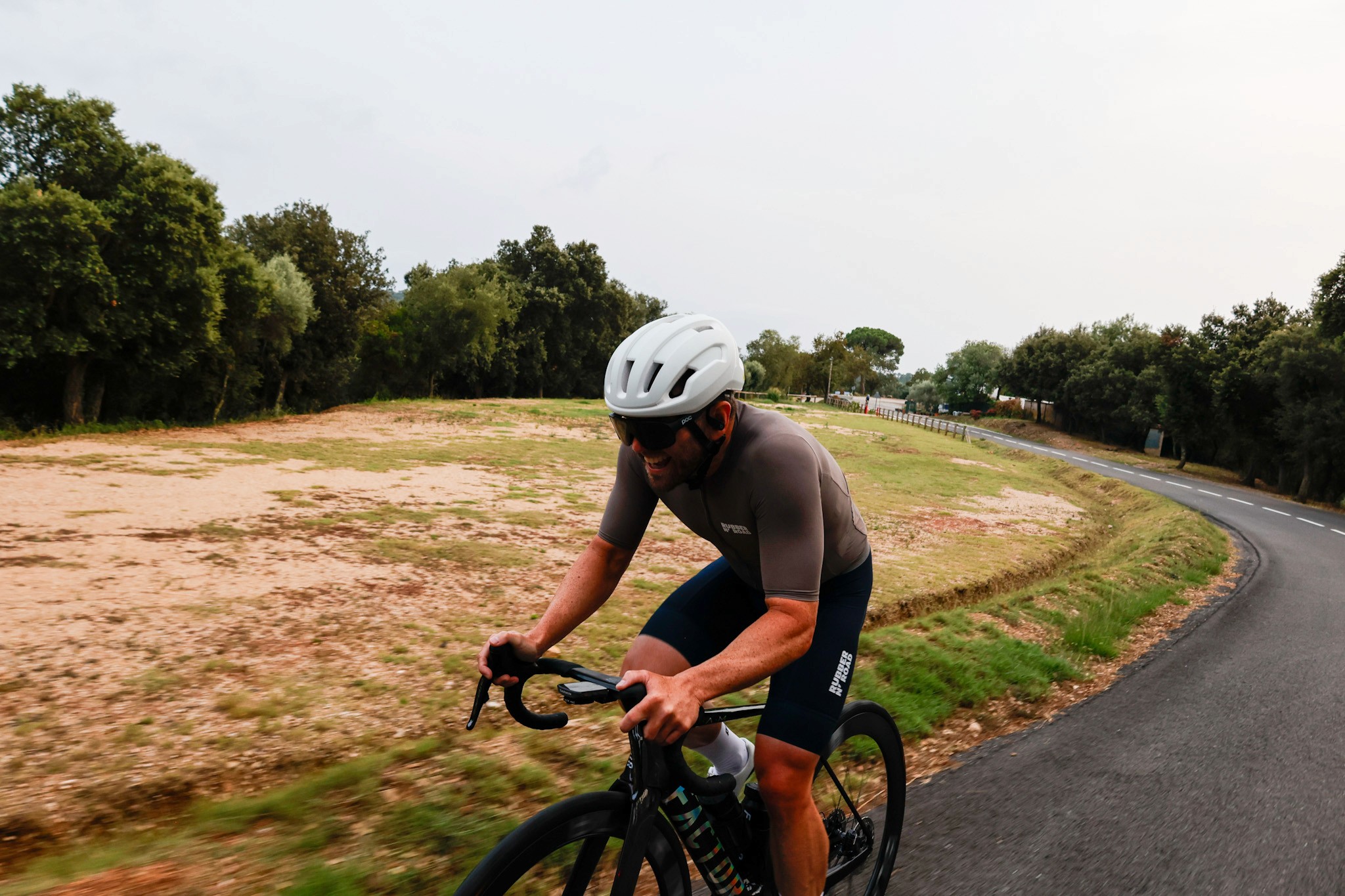
When Kenny joined Reset, he weighed just over 210 pounds. Today, he is down 30 pounds, riding at the best level of his life, and continuing to improve both his body composition and performance. More importantly, he has rebuilt trust in his body and in the process.
This is how it actually happened.
Where Kenny Started
Kenny came into the program at a point that will feel familiar to a lot of people.
He had just gotten back into cycling. His motivation was there, but his schedule was chaotic. At the time, he was working twelve-hour days on set as a cameraman, filming Netflix productions with major actors. His days were long, unpredictable, and mentally draining.
Training happened when it could. Most weekdays meant squeezing in one-hour rides wherever possible. Some weeks were decent. Others were rocky. Sessions were missed. Nutrition was inconsistent, not from a lack of care, but from a lack of structure. This is the reality for a large percentage of athletes before I start working with them. Highly motivated people doing enough work to improve fitness, but without the structure required to fully translate that work into meaningful body composition change.
During this first phase, Kenny improved his fitness. His numbers began trending in the right direction. He also lost some weight, going from roughly 210 pounds down to about 202 pounds over four months.
Progress did not stall, but it was capped. Kenny’s fitness was improving, and his numbers were moving in the right direction. What was missing was the rate of change he was actually capable of. His body was adapting to training stress, but without the right structure around recovery and nutrition, those adaptations were not fully expressing themselves in his body composition. He was doing a lot of work and getting some return, just not the return that matched his effort or potential.
This is the point where many athletes either quit entirely or respond by simply adding more work, which often compounds the problem rather than solving it..
We did neither.
Phase One: Accountability Before Optimization
For the first four months, my priority was not metabolic protocols or aggressive fat loss. It was accountability and consistency within reality.
Kenny had every reason to miss workouts. His schedule was demanding and unpredictable. But committing to coaching created just enough external accountability to help him show up more often than he otherwise would have. Not perfectly, but more consistently.
That mattered.
The goal during this phase was simple. Build the habit of showing up. Accept imperfection. Keep momentum alive. Most coaching systems skip this step and move straight into optimization. In practice, optimization only works once an athlete is properly oriented to their current reality. Until then, consistency is the highest leverage variable.
This phase laid the foundation. Without it, nothing that came next would have worked.
The Turning Point
Everything changed when Kenny finished his filming project and returned home to California.
His motivation did not suddenly appear. It was already there. What changed was his environment.
With a predictable schedule and fewer competing demands, we could finally implement a system that matched his effort.
That distinction matters. Success here was not about willpower. It was about timing and design.
Phase Two: Building the System
Once Kenny was back home, we shifted into a more deliberate performance and body composition phase.
The first change was removing decision fatigue.
His training, mobility work, and daily meal plan were all placed directly into his TrainingPeaks calendar. Every day had a clear plan. There was no guessing. No negotiating. Execution became straightforward.
From there, we focused on rebuilding metabolic flexibility.
This was not about starvation or rapid weight loss. It was about teaching his body how to efficiently use both fat and carbohydrate as fuel again.
How We Structured Nutrition and Training
We used a periodized carbohydrate cycling and caloric deficit approach aligned with training stress.
Short, low-intensity days occasionally included fasted rides, used strategically one to two times per week. These sessions were deliberate and controlled, not aggressive or dogmatic.
High-intensity days were fully fueled. We did not run a caloric deficit on these days. Carbohydrates were prioritized to support quality work and recovery.
Longer endurance days at low intensity allowed for a larger net caloric deficit, even though Kenny was still fueled during the session itself.
On rest days, calories and carbohydrates were prioritized again. Recovery was treated as productive work, not an opportunity to restrict.
On shorter, low-intensity days, we typically ran a modest deficit of around 500 calories.
This structure allowed us to apply deficits where they caused the least damage and produced the greatest adaptation.
Over time, Kenny’s metabolism recalibrated. His body became more efficient. Fuel utilization improved. Energy levels stabilized.
The Compounding Effect of Feeling Good
One of the most important shifts happened in Kenny’s subjective feedback.
Early on, good sensations were inconsistent. Over time, they became the norm.
Day after day, his legs felt better. His confidence on the bike returned. Momentum began to replace motivation. Showing up stopped feeling like a mental battle and started feeling like a natural extension of the process.
Those sensations compounded week over week and month over month. As they did, so did his results.
Within four months of starting this structured phase, Kenny dropped down to 180 pounds. At the same time, his power increased across multiple durations. His time in zone distribution became more consistent. His training load stabilized instead of spiking and crashing.
This is where fat loss and performance stop competing with each other.
What the Data Shows
Since we began working together, Kenny’s training history tells a clear story. The data also guided decision making throughout the process. Training load was progressed gradually, time in zone distribution became more intentional, and recovery trends were monitored closely to avoid spikes and crashes. Adjustments were made based on response, not assumptions, which allowed progress to continue without interruption.
Volume increased sustainably. Time in zone distribution became more intentional. Power numbers improved across short and long durations. Subjective fatigue decreased while output increased.
This was not achieved by training harder every week. It was achieved by training smarter, fueling appropriately, and allowing recovery to do its job.
The process is not finished. Kenny is still losing weight. He is still getting stronger. He is still building.
What This Actually Proves
Kenny’s transformation highlights something that is often overlooked when people talk about coaching.
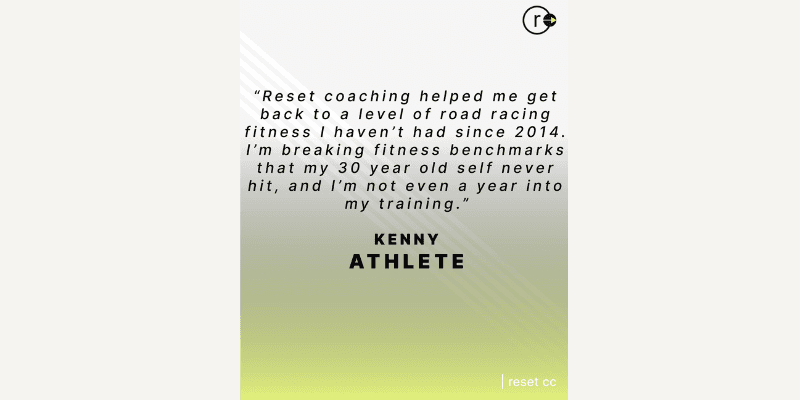
The value of coaching is not just the plan. It is accountability, structure, and orientation. Early on, the accountability piece was the primary driver. Despite a demanding and unpredictable schedule, Kenny stayed more consistent than he would have on his own. That consistency kept progress moving forward, even when life was far from ideal.
When his environment finally allowed for deeper execution, the Reset system was already in place. At that point, his body was able to adapt quickly and efficiently. The structure around training, fueling, and recovery allowed those adaptations to fully express themselves. The result was rapid changes in body composition alongside meaningful performance gains
This is what Reset is designed to do in a modern performance context.. It meets athletes exactly where they are today, not where they wish they were. From there, it helps them move to the next version of themselves by first understanding their current reality, then building the appropriate system around it.
That orientation comes before optimization. When coaching meets athletes where they actually are, not where a plan assumes they should be, transformation becomes both faster and sustainable.